Well, this week started in an interesting and I hope productive way. CurePSP arranged for some of its Board members, including myself, to meet with staff of two U.S. Senators and six members of the House on October 27, 2025. The goals were not to support any pending legislation, but to:
- Raise awareness in Congress about PSP, MSA and CBD (the three leading “atypical Parkinsonian disorders”),
- Emphasize the importance of maintaining and expanding Federal involvement in research and care for PSP, MSA and CBD.
- Encourage support for the upcoming recommendations of the advisory council established under 2004’s National Plan to End Parkinson’s Act (NPEPA). That act created a group from multiple stakeholders to coordinate and advise the Federal Government on Parkinson’s research. Thanks in part to CurePSP’s lobbying efforts, the NPEPA covers not only PD, but also PSP, MSA and CBD.
We split into two teams of six, each of which met with a legislative aide for one Senator and three Representatives. Each 30-minute meeting included one neurologist (the other being Dr. Alex Pantelyat, a CurePSP Board Member from Johns Hopkins University), three or four other CurePSP Board members, and one person from Faegre Drinker, a prominent law/lobbying firm that is helping CurePSP pro bono. The overall organizer was Jessica Shurer, CurePSP’s Director of Clinical Affairs and Advocacy.
My team’s four meetings were with staff of Sen. Andy Kim (NJ), Rep. Neal Dunn (FL), Rep. Darin LaHood (IL), and Rep. Troy Balderson (OH). The other team met with staff of Sen. Eric Schmitt (IN), Rep. Doris Matsui (CA), Rep. Morgan Griffith (VA), and Rep. Diana DeGette (CO). Of the eight, in case you’re interested, three are Democrats and five are Republicans.
Each 30-minute meeting included:
- A quick introduction to the three diseases and how they differ from Parkinson’s,
- Some personal anecdotes of the difficulties navigated by the patients and their caregivers,
- Some description of where the research stands right now, and
- Our hopes and recommendations regarding the role of Congress in the fight.
All the staffers were well-trained, energetic, respectful, gracious, and eager to help. They asked pertinent questions, took notes, and tried to focus on what’s feasible for their boss to do, either behind the scenes or through formal channels. No one raised any political issues.
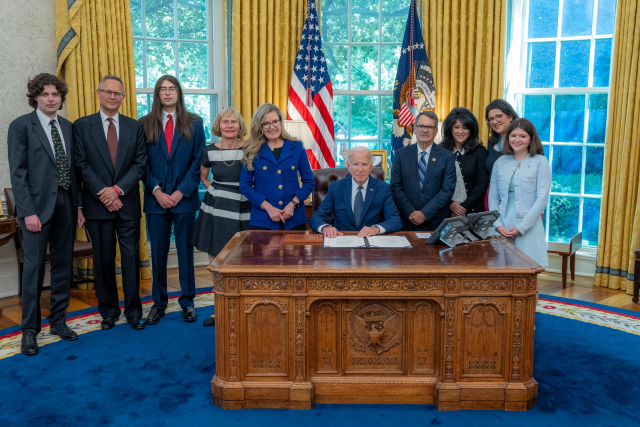
A powerful point of ours came from former Representative Jennifer Wexton of Virginia and NPEPA co-sponsor, who retired last year because of advancing disability from PSP. She was unable to be part of our meetings but asked Jennifer Shurer to relay the following message to her former colleagues on Capitol Hill: “If PSP happened to me, it could happen to you or anyone.”
Was this all just political theater? Maybe to an extent, but that’s how truly meaningful things get started – by grabbing the attention of those in power and educating them on our concerns, even via a junior staffer for a half hour. We at CurePSP are grateful for the chance to get that ball rolling.
 PSP Blog