More than the sum of its parts

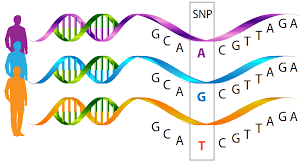
The first PSP whole-genome analysis (or WGA) was published in 2011. It found that “markers” associated with each of four genes were more common among people with PSP than among controls without PSP. Those markers were themselves genes of precisely known location on their chromosome but with unknown or irrelevant function. Such a gene is useful as a marker if one specific nucleotide (the A’s, T’s, G’s and C’s of the genetic code) varies among healthy individuals. Such a phenomenon is called a “single nucleotide polymorphism” or SNP, pronounced “snip.”)

So, for example, at a certain location on, say, chromosome 1, the general population might have an A in 70% of people, a T in 20%, a G in 8% and a C in 2%. If that array of frequencies is different (to a statistically significant degree) in the population with a certain disease, it means that the marker gene is located very close to (or sometimes even within) a gene that’s actually contributing to the cause of the disease.

Since then, it has become possible to easily work out the sequence of nucleotides in every gene, which, as you’d imagine, can make it a lot easier to find genetic causes of diseases. But it’s not as easy as it sounds because it’s hard to distinguish a harmless copying error from a disease-causing error. Besides, the statistics required for sequencing studies have not yet been fully invented. So, good old marker analysis is still very important and useful.


Now let’s talk about the cause of PSP. There seems to be some sort of genetic predisposition that increases the risk but is probably not enough to actually cause the disease within a usual human lifespan. So, something else, presumably an environmental exposure, is probably needed. The only such candidate toxins discovered to date for PSP have been metals, though specific metals have not been clearly identified. (There’s also unconfirmed PSP risk for consumption of paw-paw, a fruit harboring a mitochondrial toxin; and well-confirmed incrimination of lesser educational attainment, though how that relates to environmental toxins or to PSP is unknown.)
Each of those four genes identified in 2011 and about 14 others discovered since raises the risk of PSP by only a tiny amount – in the neighborhood of 1-2%. But that figure was calculated separately for each gene. There has been no attempt to work out how the risk genes might interact to raise the PSP risk enough to allow the disease process to get started, with or without an extra boost from some mysterious environmental exposure.


Still with me? I hope so, because I’ve finally gotten to my point.

The current issue of Journal of Neurogenetics includes a paper from a research group in Bangalore, India headed by Dr. Saikat Dey of the National Institute of Mental Health and Neurosciences, with senior author Dr. Ravi Yadav. They looked only at those original four genes identified in the 2011 whole-genome marker analysis, called MAPT (encoding the tau protein), STX6 (encoding for syntaxin, which directs the movement of tiny chemical-filled balloons called vesicles in brain cells), MOPB (encoding myelin basic protein, a component of the layer of insulation around axons in the brain), and EIF2AK3 (encoding PERK, a protein that helps regulate the stress response in brain cells).


Dey et al looked for combinations of these genes’ markers occurring at a greater frequency in PSP than expected by chance given their individual frequencies. (This is called “epistatic” gene interaction.) The strongest result was between MAPT, STX6 and MOBP. The interaction between MAPT and MOBP was almost as strong, and slightly weaker interactions occurred between MOBP and STX6 and between MOBP and MAPT.


So what, you say? This is important because it can explain how gene variants, each of which raises the likelihood of developing PSP only very slightly, can nevertheless cause the disease if they occur together, perhaps even without any ancillary environmental toxin.


This can explain why PSP and other neurodegenerative diseases generally run only weakly in families: It’s unlikely that any two close relatives will share the same combination of gene variants that raise PSP risk.


Here’s a general illustration of what I’m talking about: Suppose a disease occurs with 100% likelihood in anyone with a risk mutation in each of three specific genes and that each mutation by itself has a frequency of only 1% in the population. That means that for someone to develop the disease, they’d need the unlucky combination of three 1% events. That likelihood is 1% to the third power, or 1 in a million. Now, that person’s sibling would have only a 50% chance of sharing the same form of each gene (called an “allele”). So, for each sibling of the person with the disease, the chance of sharing all three disease-causing alleles would be 0.5% to the third power, or 1¼ in 100 million.


Such gene interactions explain how a purely genetic disease could so rarely occur twice in the same family.


I’ve simplified the analysis of Dr. Dey and colleagues, and more important, there are at least another 10 PSP risk genes that their analysis didn’t consider. So, I hope they or someone else gets around to that very soon. Maybe they will find that the cause of PSP can be entirely explained by unusual combinations of mildly risk-conferring genes that can be tested for in a drop of saliva. That has some important ethical implications, but it could permit genetic counseling and could make it much easier to find volunteers with “pre-PSP” on whom to test drugs to slow or halt the disease’s progression. Furthermore, identifying a combination of protein actions that, when deficient, causes PSP could permit targeted design of new drugs.

A conspiracy theory

In August 2022, over 2 months ago, the august journal Science published an important paper on the genetics of PSP.  I had difficulty wrapping my head around the complicated, cutting-edge technical aspects of the work, so I procrastinated in relaying it to you. 

But last week, at CurePSP’s annual International Scientific Symposium in New York City, the paper’s senior author, Daniel Geschwind of UCLA, presented the work clearly enough for a non-lab person like myself and I now feel comfortable telling you that this paper is a real game-changer for PSP.  The first author is a very junior member of Dr. Geschwind’s lab, Yonatan Cooper, a recent PhD who’s studying for his MD.  The name of the paper is “Functional regulatory variants implicate distinct transcriptional networks in dementia.”

Until now, pretty much all we’ve known about the molecular genetics of PSP is that there are two places in MAPT (the gene encoding the tau protein), where one version of the gene is a little more common in people with PSP than in healthy people, and that there’s similar incrimination of a handful of other genes on other chromosomes.  These variants are all in “markers,” rather than in the genes themselves.  That is, a spot near the gene is the thing whose variant is statistically over-represented in those with the disease relative to healthy people.  That doesn’t tell us for sure which of the dozens of genes in the vicinity of the marker is the actual disease-associated gene and it definitely doesn’t tell us the nature of the gene’s defect, or how it contributes to brain cell loss.

But now, the researchers at UCLA have analyzed the actual function of the genes in the chromosomal neighborhood of each of 9 markers associated with PSP.  This is a huge undertaking, so they use a new technique called a massively parallel reporter assay (MRPA), which reveals gene expression.  That is, it shows the types and amounts of proteins encoded by each of the 9 PSP-related genes and the other nearby genes incriminated by that marker.

The result was that the PSP-associated genes didn’t encode proteins themselves, but rather, served a regulatory function.  The two genes most heavily associated with PSP were PLEKHM1 and KANSL1.  Both are on chromosome 17, very near the MAPT gene.  The disordered DNA sequences for PSP were transcription factor binding sites, the places in the gene where regulatory proteins can attach in order to do their job of adjusting the amount and composition of the protein encoded by that particular stretch of DNA. 

So, what does this mean?  To quote the paper, “These analyses support a mechanism underlying noncoding genetic risk, whereby common genetic variants drive disease risk in aggregate through polygenic cell type-specific regulatory effects on specific gene networks.”  The English-language version is that they showed that the genetic contribution to PSP consists of variants in members of groups of genes that work together to regulate a specific cellular function.  An individual with PSP simply has the bad luck to harbor enough such genes to get the disease process going. 

The research paper shows that the gene variants themselves don’t directly encode a toxic version of a normal protein, as occurs in Huntington’s disease or other highly heritable brain degenerations.  The toxic levels of tau in PSP must therefore be the indirect result of the disordered gene regulation, and as Dr. Geschwind emphasized, this and many other possible indirect effects of genetic variation contributing to the cause(s) of PSP remain to be discovered. 

The fact that multiple genes must conspire together to produce the disease could explain why PSP is almost never familial: it’s very rare that more than one member of a family would have enough of the gene variants to accomplish any nefarious purpose.  Someone with PSP would have had to inherit some variants from Mom and some from Dad, neither of whom had enough variants to cause the disease in themselves.  Then, of course, one or more environmental exposures or experiences are probably also necessary but insufficient co-conspirators.  But that wasn’t part of this project.

Enough for now.  In a future post I’ll speculate with abandon on the implications for anti-PSP drug development.

Is PSP genetic? An update

Last week, someone wrote to CurePSP asking if PSP was genetic. I took a look at what I had previously provided CurePSP on that topic to post on its website, and decided it wasn’t nearly detailed enough. So I decided to write up the following. A version of it appears, or will soon appear, at http://www.curepsp.org.

PSP only very rarely runs in families.  Fewer than one in 20 people with PSP knows of even one other family member with PSP, even counting distant cousins. 

But when multiple genetic variants confer only small risks of developing a disease and some sort of non-genetic factor is also necessary, it will be rare for more than one member of a family to have the unlucky co-occurrence of enough of those factors to produce outward signs of the disease. 

That’s basically how PSP works, but then things get a little more complicated:

The gene on chromosome 17 that encodes the tau protein is called MAPT, for “microtubule-associated protein tau.”  The MAPT gene has two variants that are more common in PSP than in the rest of the population.  One of them is called the H1 haplotype and actually consists of a section of the chromosome that is reversed relative to adjacent sections.  About 95 percent of people with PSP have this variant on both of their copies of chromosome 17, while this is true for only about 60 percent of the rest of the population.  So the H1 haplotype is (nearly) necessary but far from sufficient to cause the disease. 

We’re still not quite sure how the H1 haplotype increases PSP risk.  It may simply increase the amount of tau produced, which causes that protein to stick together, even if it’s structurally normal.  But more recent work shows that it causes too many methyl groups to stick to the MAPT gene, altering its function. This is exciting because drugs can be developed to alter DNA methylation. Other recent evidence supports the idea that the H1 haplotype reduces the fraction of tau molecules that include the fragment encoded by the MAPT gene’s exon 2. 

The other MAPT variant associated with PSP is statistically independent of the H1 haplotype and its function is unknown.

Over the past two decades a handful of other gene variants not on chromosome 17 have been found to be slightly more common in people with PSP than in those without PSP.  These genes help control a variety of critical processes such as disposal of damaged proteins, inflammatory mechanisms, operation of synapses, and integrity of the brain cells’ insulating sheaths.  However, the effect of these genes, individually or together, is too small to serve as a diagnostic test for the disease or to produce more than one case in a family.   

A gene called LRRK2 has been found to influence (in a rough way) not the likelihood of PSP, but the age at which it starts.  CurePSP is presently supporting a project to pursue this clue to try to find a blood test that might predict the individual’s rate of progression.  As it happens, mutations in LRRK2 are the most common cause of familial Parkinson’s disease and the occasional person with that mutation will have the pathology of PSP at autopsy despite having had the outward appearance of PD during life.  Wonders never cease.  Drugs that suppress the action of abnormal (and normal) LRRK2 are in trials for Parkinson’s.

Despite all I’ve said about the genetic component of PSP being subtle, a small fraction of people with PSP do have a relative with the same diagnosis, raising questions about the risk to their siblings and children.  A few points of advice about that:

  • When a disease occurs in several members of a family in a pattern consistent with either a dominant or a recessive mechanism, it’s easy nowadays to identify that gene.  Despite the dozens of families alleging multiple members with PSP, such a gene has never been reported in the literature. 
  • False-positive diagnoses of PSP are common.  This may account for most of the reports of multiply-affected families, even if one of them had autopsy confirmation.  However, in most situations where two or more relatives have been diagnosed with PSP, there have been no autopsies.
  • A strongly familial disorder called frontotemporal dementia with parkinsonism (FTDP) can mimic PSP, even at autopsy, but the special features of PSP such as balance loss and trouble with downgaze are mild or absent.  Many of the mutations causing this disorder are in the MAPT gene, but those mutations do not occur in non-familial PSP.  Furthermore, FTDP is associated with the MAPT’s H2 rather than H1 haplotype.  Both of these points cast additional doubt on FTDP being real PSP.  The FTDP-associated mutations can be detected by a commercially available blood test with a doctor’s prescription, but they are very rare, with only about 100 such families having been reported in the medical literature world-wide.
  • Despite those caveats, there actually are two or three families world-wide having several members with ordinary PSP (i.e., not FTDP) both during life and at autopsy, with no mutations in the MAPT gene.  Such families can be highly valuable for PSP research, as the gene causing their disease could be encoding a protein that might be key to all PSP.

Bottom line: 

Familial PSP is so rare that people with that condition need not be concerned for their children or siblings.  This advice even accounts for the possibility that what has been diagnosed as PSP may in fact be its rare, familial imitator, FTD with parkinsonism.  Most PSP experts advise their patients’ healthy relatives to make no changes to plans for career, children or finances because of one person with PSP in the family. 

However, when there is a clear indication of two or more close relatives with PSP, one should consider testing one affected person for FTDP by sequencing either the MAPT gene or a battery of genes associated with various dementing neurodegenerative diseases.  This should be done only with the guidance and participation of a genetics counselor or neurologist well-versed in interpreting genetic testing.  If the affected patient has one of those mutations, then another affected relative can be tested as confirmation and healthy relatives can be tested for the same specific mutation if they so choose.  However, a positive result would not predict the age of symptom onset, so there is little or no actionable information to be gained through testing healthy relatives.

Further research results in the near term could change these recommendations, so keep an eye on http://www.curepsp.org for updates.  But if you want me to speculate right now, take a look at the next post.

Drilling into a gene

So here’s the second of five installments in this fall’s series on CurePSP’s newly funded grants. 

Do you recall that the 2011 publication by CurePSP’s Genetics Corsortium discovered four new places in the genome where a slight variant is associated with slightly greater chance of developing PSP?  The genes containing those variants are cryptically called MAPT, STX6, EIF2AK3 and MOBP.  The first one stands for “microtubule-associated protein tau” and the protein it codes for is, of course, our old frenemy, the tau protein.  Well, when you break the effect down statistically, it turns out that in the MAPT gene, two different variants are each independently associated with increasing PSP risk.  One has been known since 1998 and remained the only known PSP genetic risk factor until 2011.  Its name is the “H1 haplotype.”  (Click on the link for explanatory details. )  The other one, previously unknown, is called only “rs232557.” That variation specifically is the substitution of one “letter” in the genetic code for another, called a single-nucleotide polymorphism, or SNP, pronounced “snip.”  The substitution is probably not itself be the cause of the PSP risk; it’s only a “marker,” a variation that was already present in the MAPT gene in the individual in which the PSP-causing mutation originally occurred. That person then passed both the innocuous old marker variant and the new disease-causing variant together to subsequent generations.  The two stayed together on the chromosome (in this case, chromosome 17) through all those generations because their very close physical proximity means that a break between them during the reproductive process (where sperm cells or ova are made, called “meiosis”) is statistically unlikely. 

Still with me here?  Back to the new grant, where Rueben G. Das, PhD of the University of Pennsylvania proposes to figure out just how the variant revealed by the rs242557 marker increases PSP risk.  We already know that rs242557 is located in an intron of the MAPT (tau) gene.  Introns are long stretches of DNA between the shorter stretches, the exons, which actually encode the structure of proteins.  Introns can do a variety of things, though many of them seem to be just “junk DNA” deactivated by the evolutionary process somewhere between single-celled creatures and ourselves.  But some introns regulate the “expression” of the exons, i.e., the number of RNA molecules the exons produce, which in turn determines the number of molecules of the corresponding protein that the cell makes. 

Introns may also regulate which specific exons in the gene actually get encoded into RNA and which don’t.  That’s relevant for PSP, where nearly all the tau molecules in the neurofibrillary tangles include the product of MAPT’s exon 10, producing “4-repeat” tau.  This contrasts with normal tau in adult human brain, which includes exon 10’s stretch of amino acids on only half of the copies.  The other half are called “3-repeat” tau.

One of Dr. Das’ experiments will simply excise (“knock out”) the variable nucleotide at the rs242557 site.  Others will knock out or change one of the nucleotides nearby.  These experiments will be tried in both mouse and human brain cells.  One of the outcomes the researchers will look for will be the ratio of messenger RNA for the two forms of tau, 3-repeat tau and 4-repear.  A ratio favoring 4-repeat tau would suggest a PSP-causing effect.  Of course, they will also look at the finished tau proteins corresponding to these MAPT gene variants.

Additional readouts will be the messenger RNAs for other genes located in the same general area of chromosome 17 (and their associated proteins) that have bene associated with PSP or Alzheimer’s disease.  Those genes are called NSF, KANSL1, LRR37A and CRHR1.

Dr. Das completed a postdoctoral fellowship (the final stage of training for a lab scientist) at Penn in 2017 under the mentorship of Gerard Schellenberg, PhD, a world authority in the genetics of neurodegenerative disorders.  They continue to work together now that Dr. Das has graduated to Senior Research Investigator at Penn.  Jerry serves on CurePSP Scientific Advisory Board and of course recused himself from the evaluation of this grant application.

Back to science: To create these tiny, targeted changes in the DNA at the rs242557 site, Dr. Das and colleagues will use the new gene-editing technique called CRISPR-Cas9.  Just a month ago, the two scientists most prominent in the development of that technique, Jennifer Doudna and Emmanuelle Charpentier, received the Nobel Prize for that work, which appeared in 2012 and has been called one of the most important advances in biological science in history.   Like many useful techniques in biology and medicine, this one harnesses something from nature, in this case an anti-viral defensive mechanism present in about half of all species of bacteria, an enzyme called CRISPR (clustered regularly-interspaced short palindromic repeats).  The CRISPR protein is coupled with another bacterial protein, Cas9, which can cut DNA.  (“Cas” means CRISPR-associated, and yes, there are at least eight other Cas enzymes.)  The researcher then adds to the complex of CRISPR and Cas9 a stretch of synthetic RNA custom-designed to complement the stretch of DNA targeted for alteration.  That “guide RNA” allows the complex to recognize the DNA site of interest, where the Cas9 proceeds to make a cut. 

If this project is successful and reveals which nearby genes are up- or down-regulated by variants in rs242557, the next steps would be to try to normalize the function of the resulting protein by other means such as conventional drugs. Another approach might reduce the expression of the offending DNA variant by giving an anti-sense oligonucleotide.

This grant is only a one-year project and I’ll report its results once published or otherwise publicly presented.  Stay tuned now for posts on the other new CurePSP grants.