Two new drugs rarin’ to go

Some good news for those seeking to enroll in a PSP drug trial: The PSP Platform (PTP) is scheduled to start enrolling in the first quarter of 2026. The first two drugs will be the AADvac1 and AZP-2006. The first is a vaccine that stimulates the immune system to make its own anti-tau antibodies.  The second boosts the part of the brain’s garbage disposal system most relevant to PSP.

The third drug is still being finalized with its Pharma sponsor and some points in the study protocol await approval by the FDA.  Only then could the results potentially be used to support a new drug application.  These delays explain the start-up postponement from December 1, 2025 listed in ClinicalTrials.gov to early 2026.

As described in more detail in previous posts here and here, the PTP is a group of about 50 centers in the US led by neurologists at UCSF, UCSD and Harvard.  They have created an infrastructure to test up to three drugs simultaneously, each in its own set of 110 participants.  A major advantage of such a plan is that all three trial groups share the same placebo group.  That way, each participant has only a 25% chance of being assigned to placebo.  The other obvious advantage is cost savings, which could lower the bar for a company to give its drug a go.  The trial is heavily subsidized by a grant from the NIH budgeted for about $14.5 million this year and similar amounts annually through 2029. https://reporter.nih.gov/project-details/11160498

The names and locations of the approximately 50 participating sites across the US have not been announced, but those interested should keep an eye on the ClinicalTrials.gov page https://clinicaltrials.gov/study/NCT07173803 or wait a few days and contact the study’s central enrollment center at 213-821-0569 or psp-participate@usc.edu at the University of Southern California. But perhaps the best option is simply to register with CurePSP for updates on the trial’s status.

Reality check: As for most PSP drug trials, the hope is to slow the rate of progression. The PTP is designed to be able to detect a slowing relative to the placebo group of 33% or better over the 12-month period of the trial.  The trial’s design is based on assumption that the drug would not improve the symptoms – it would at best slow down the pace at which they worsen.  But if all goes well, that could mean many months or even a couple of years of good-quality life.  An even better outcome to hope for is that one of the drugs would work well enough to prevent progression altogether (“100% slowing”), maintaining the present level of symptoms for the remainder of whatever would have been the person’s lifespan without PSP. 

A 33% slowing is a very realistic hope. That 100%-slowing scenario is only a distant hope, but one that’s theoretically possible. And hope does matter.
For once

Some excellent news for you today.  The orally administered drug AZP-2006 has shown early signs of slowing the progression of PSP. (Yes, you heard right!)

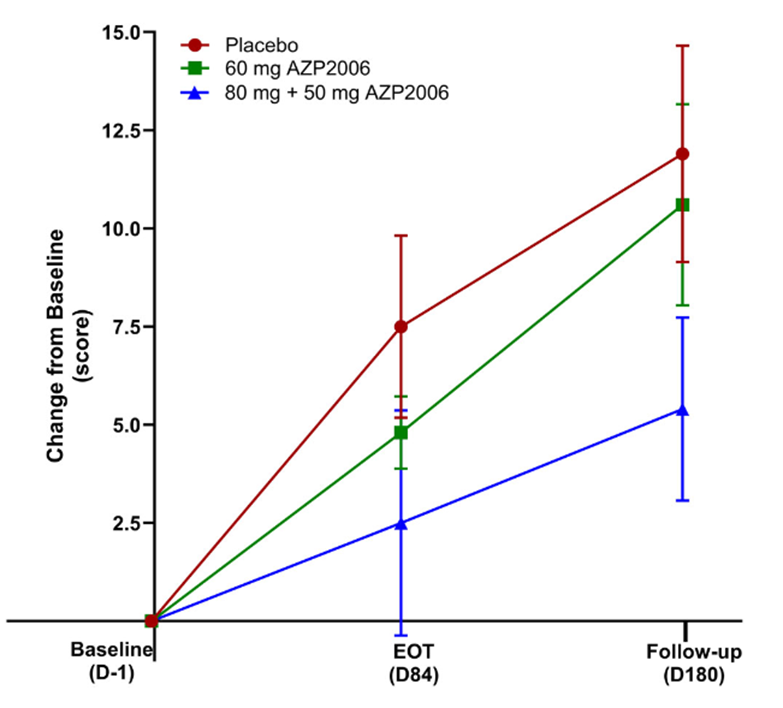
My blog post from May 9 of this year brought news that a small, open-label, Phase 1 study of AZP-2006 seemed to have slowed the progression of PSP by 31 percent.  Now, the drug has completed a small, double-blind, Phase 2a trial with even better results: In the 11 patients receiving 60 mg per day, the worsening in the PSP Rating Scale score over the 3 months of the double-blind phase was a third slower than in the placebo group (identical to the result of the uncontrolled Phase 1) and in the 13 patients receiving a loading dose of 80 mg on the first day and then 50 mg per day, the apparent worsening was two-thirds slower.  

It’s important for you to understand, and the authors repeatedly emphasize, that these results were not statistically significant, meaning that they could be the result of a random fluke.  There were also some minor differences among the three patient groups (placebo, 60 mg, and 80 mg then 50 mg) at the study’s baseline that theoretically could have explained the results.  A larger, Phase 2b study could confirm the result while having the statistical power needed to compensate for any “baseline bias” among the treatment groups. 

The trial included a 3-month open-label extension. That’s where the participants on placebo for the first 3 months were offered the opportunity to convert to the active drug at 60 mg per day, while those initially on the active drug could opt to continue it.  Over months 4, 5 and 6, the rate of decline of the formerly-placebo group slowed down noticeably.  The other important result is that the drug showed itself to be safe and well-tolerated over the entire 6 months.

The publication’s first author is Jean-Christophe Corvol, MD, PhD, a very well-regarded, senior neurologist I know at the legendary Hôpital Pitié-Salpêtrière in Paris.  The senior (i.e., last-named) author is Luc Defebvre, MD, PhD, at Lille University. Six of the other 16 authors are staff researchers at the sponsoring drug company, AlzProtect, of Lille, France.

In this graph, the vertical axis is the worsening in terms of the 100-point PSP Rating Scale.  EOT is end of the double-blind part of the trial at Day 84.  Thereafter, all participants received active AZP-2006.  Note that both active-drug groups progressed more slowly than the placebo group over the first 3 months; and on active drug, the participants formerly on placebo may have slowed their progression rate. The vertical line segments represent standard deviations of the mean. (From:  Corvol JC, Obadia MA, Moreau C, et al. AZP2006 in progressive supranuclear palsy: outcomes from a Phase 2a multicenter, randomized trial, and open-label extension on safety, biomarkers, and disease progression. Movement  Disorders. 2025 Sep 27. doi: 10.1002/mds.70049. PMID: 41014124)

So, when will the Phase 2b study start?  My May 5, 2025 post reported on the “PSP Platform,” (PSPP) an NIH-supported collaboration among dozens of U.S. academic centers to perform Phase 2b trials on up to three drugs simultaneously using one placebo group.  One of the first three drugs, in fact, is AZP-2006.  Last I knew, the PSPP was expected to start late this year, but it’s now almost October and I’ve heard nothing further other than that some details remained to be ironed out with the FDA. That trial would take about 6-12 months to recruit and then another 12 months for the last patient to finish, then at least a couple of months to analyze the data. 

So, how does AZP-2006 work?  I’ll plagiarize my own May 9 blog post, along with its “Nerd Alert!” warning that this gets technical:

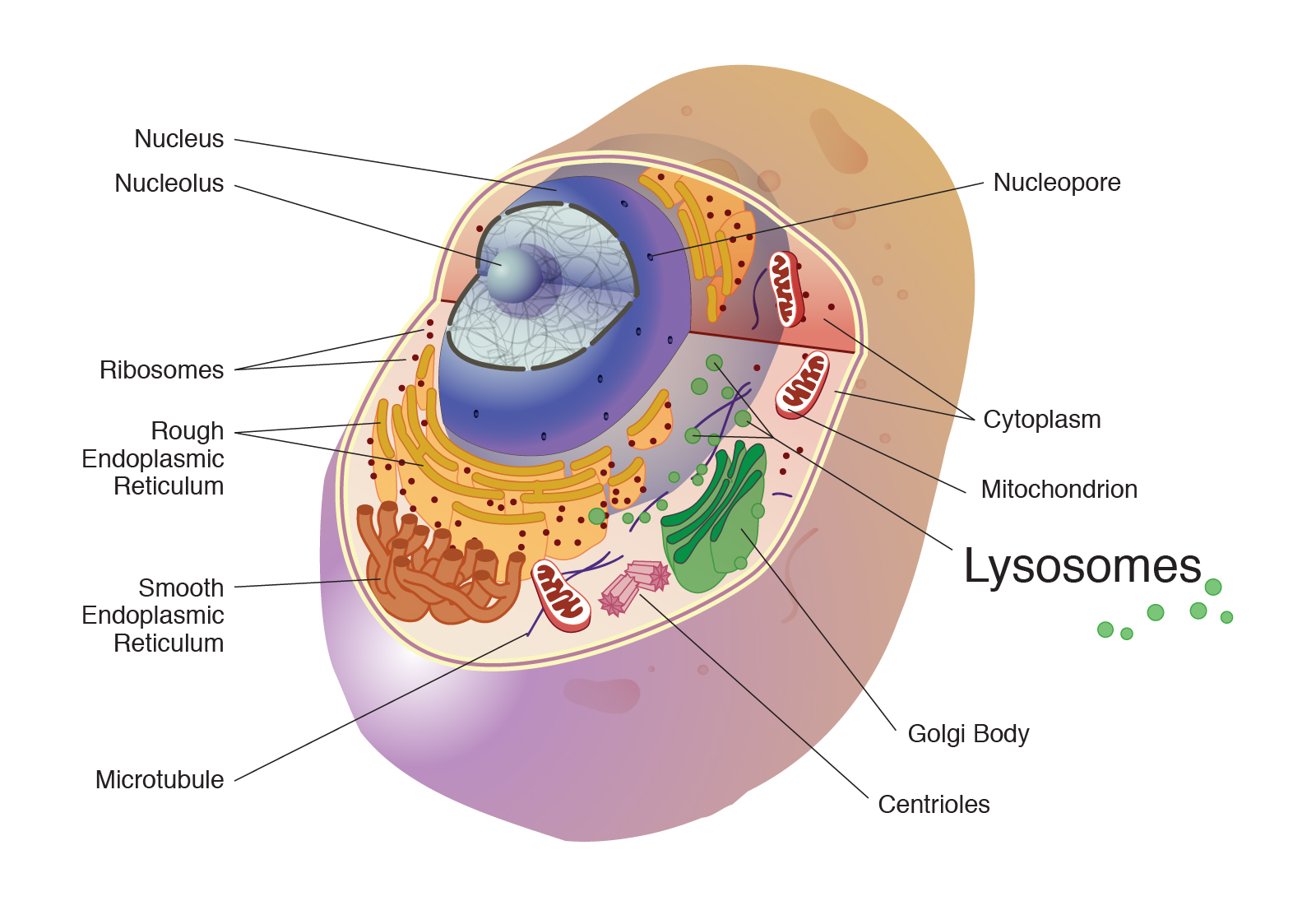
The main mechanism of action of AZP-2006 is at the lysosomes, one of the cell’s garbage disposal mechanisms, where it acts specifically at the lysosome’s prosaposin and progranulin pathways. Prosaposin is the metabolic precursor (a “parent molecule” cleaved by enzymes to produce the active molecule) of the saposins, a group of proteins required for the normal breakdown of various types of lipids that are worn out or over-produced or defective from the start. Progranulin is the precursor, as you’d guess, of granulin, which, like saposin, is involved in function of the lysosomes. But progranulin addresses disposal of proteins, not lipids. In mouse experiments, the drug also enhances the production of progranulin, mitigates the abnormal inflammatory activity in tauopathy, reduces tau aggregation, and stimulates the growth or maintenance brain cell connections.

Bottom line: This very small, Phase 2a trial was designed to show safety, not efficacy, and its slowing of PSP progression did not nearly achieve statistical significance nor exclude potential sources of random bias.  But the magnitude of the (apparent) effect make this excellent news for those with PSP, present and future.

GV-1001: unclear news is good news

In July 2023, I posted a guardedly optimistic report on the launch of a small, Phase 2a trial in South Korea of the drug GV-1001, with the generic name “tertomotide.”  Three weeks ago (sorry for my delayed vigilance on your behalf), the company released some of the results.  The headline was that the drug failed to show benefit in slowing the rate of progression on the PSP Rating Scale.  Nevertheless, the company, GemVax, said they remained optimistic and would proceed with plans for a Phase 3 trial in North America and elsewhere.

Here’s the deal in a bit more detail.  I say “a bit” because it’s not as much detail as I’d want to see.  The trial was only 6 months long and the plan was for only 25 patients in each of the three groups: higher dose, lower dose and placebo.  That’s too brief and too small to demonstrate a realistic degree of slowing of progression.  The best longitudinal analysis of PSP to date calculated that to demonstrate a 30% slowing in a 12-month trial would require 86 patients per group.  Shorter trials and more modest slowing would require even more patients than that.  But early-phase trials like this are mostly about safety, not efficacy.

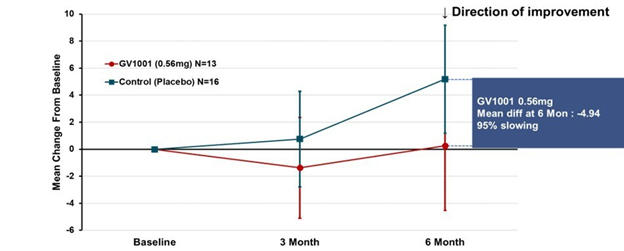
The results for the low-dose and placebo groups appears below, just for the PSP-Richardson patients: 

The vertical axis is the average improvement (downward) or worsening (upward) in the total PSP Rating Scale relative to the patient’s own baseline score.  (On the PSPRS, 0 is the best and 100 the worst possible score, and the average patient accepted into a drug trial has a score in the mid-30s.)  At 3 months, neither group showed much change.  But at 6 months, the placebo group had deteriorated by 4 points but the active drug group had remained close to its baseline.  So, that looks like a benefit, but the wide standard deviation (the vertical “whiskers” at 3 and 6 months) were too large to support statistical significance (i.e., to rule out the possibility of a fluke result).  Hence the negative headline, but you can see why the drug company felt encouraged by the result.

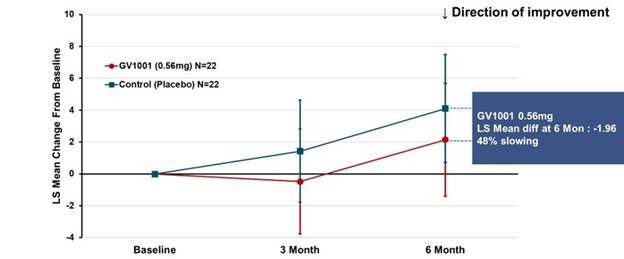
A more complicated but statistically more valid way to look at the same results appears below. This graph applies to both PSP-Richardson and PSP-Parkinson patients, hence the larger Ns:

This time the vertical axis is “least square mean change from baseline.”  That uses a statistical technique called “mixed-model repeated measures” to compensate for statistical noise in the results.  The basic shapes of the active drug and placebo curves look similar to the raw score graph.  But now, the two lines have the same slope between 3 and 6 months, suggesting that their rates of progression over that period were the same.  The interval from baseline to 3 months did have different slopes, favoring active drug.  So, this could mean one of 3 things:

  1. There’s a neuroprotective effect (i.e., a slowing of the progression rate) that lasts only 3 months, at which point the two groups proceed to progress at the same rate;
  2. There’s a symptomatic improvement by the 3-month point that persists to the 6-month point, but no protective effect at any point; or
  3. The trial’s small size, wide standard deviations, paucity of evaluations and short duration make it impossible to draw any conclusions about symptomatic or neuroprotective efficacy.

I’ll vote for Option 3.

The data for the high-dose group, which received twice the lower dose, is not presented in the company’s press release.  However, the high-dose group was included in the poster at the Neuro2024 conference (CurePSP’s annual international scientific meeting) in Toronto in October.  It did not show the possible benefit that the low-dose group showed.  So, that’s a little discouraging, but it’s not unheard-of in pharmacology for a higher dosage regimen to do something extra via a different chemical mechanism that counteracts some of the benefit of a lower dosage. So, that doesn’t worry me much.

    Now, the issue is just how safe and tolerable the drug was.  The press release only says, “The safety profile of GV1001 in the Phase 2a PSP Clinical Trial was consistent with prior safety data. GV1001 was generally well-tolerated with no serious adverse events related to the drug reported.” I’ve seen the actual numbers, and the press release is right. All of the adverse events, and there were very few, were things common in this age group or complications of PSP itself.

    So, that’s probably more information than you wanted about GV-1001, or maybe it’s a lot less than you’d have liked. (I’m in the latter category.)  Bottom line is that the results were good enough to justify a Phase 3 trial, which is slated to start in 2025, and that’s really good news.

    Note: The text in italics explaining the two graphs and detailing the drug side effects are corrections or additions to my originally posted version. I thank Roger Moon, Chief Scientific Officer of GemVax, for supplying this information after he saw the original post. These changes do not alter my conclusions.

    More fishy news

    My post from two weeks ago, entitled, “A big little fish,” was about zebrafish as an experimental model for PSP.  This creature, once the normal human tau gene has been added to its genome, is uniquely suited for efficiently screening long lists of drugs as treatment for tauopathies.  I specifically cited a publication screening 147 currently available drugs modulating the attachment of phosphate groups or other regulators of tau production. It yielded two reasonable candidates for further research in other animal models or in people with PSP.

    This week, there’s another important finding in zebrafish, except that it concerns not tau production, but tau disposal.

    A research group at the University of Cambridge led by Drs. Ana Lopez, Angeleen Fleming and David Rubinsztein used zebrafish with the normal human tau gene to screen 1,437 compounds for use against tauopathies.  All had been either FDA-approved for medical use or found in clinical trials to be safe, even if ineffective for whatever they were being tested for. 

    Next, they tested those 1,437 for the ability to improve the survival of a set of cells in the fishes’ eyes (the rods) that normally produce the tau protein.  Of the 71 passing that test, the researchers chose the 16 that seemed easiest to study further.  Of those, the most effective at rescuing cells from degenerating was the drug methocarbamol, which is available by prescription for muscle spasms under the brand name “Robaxin.”  One of the several actions of methocarbamol unrelated to muscle relaxation is inhibition of an enzyme called carbonic anhydrase, which regulates the acid-base balance of cells. 

    Drugs that specifically inhibit carbonic anhydrase are available for use in glaucoma and in a variety of neurological disorders.  Three of the most popular anhydrase inhibitors are acetazolamide (brand name Diamox), methazolamide (Neptazane) and dorzolamide (Trusopt). To determine if carbonic anhydrase inhibition explains the benefit of methocarbamol in the zebrafish, the researchers gave those three drugs to a different colony of zebrafish with a human tau gene, but in this case the human gene carried a mutation called P301L, which causes a rare, hereditary, PSP-like illness. 

    To the Cambridge team’s delight and ours, all three carbonic anhydrase inhibitors provided major protection against the damage caused by that tau gene mutation.  A further set of experiments showed that the mechanism of protection was that the drugs work by improving the export of tau from the cells by the lysosomes.  Those are organelles that perform part of our cells’ complicated garbage disposal mechanism.

    I’ll let the researchers’ own words describe the overall results:

    Together, our results suggest that CA [carbonic anhydrase] inhibition ultimately regulates lysosomal acidification and cellular distribution, promoting lysosomal exocytosis and tau secretion. This mechanism lowers tau levels within neurons, which, in turn, have lower levels of hyperphosphorylated and aggregated toxic tau forms, accounting for an improvement in phenotypic, neuronal loss and behavioral defects in vivo in zebrafish and mouse models. This raises the possibility of rapid repurposing of CA inhibitors for tauopathies, as our studies were performed in mice at human-like plasma concentrations. Furthermore, our data suggest that stimulation of unconventional secretion may also be a potent therapeutic approach for other neurodegenerative diseases caused by toxic, aggregate-prone intracellular proteins.

    So, the “elevator explanation” is that carbonic anhydrase inhibitors make the fluid in lysosomes more acidic, enhancing their ability to load up on abnormal tau protein and dump it out of the brain cell.

    This finding could lead to repurposing existing, off-patent carbonic anhydrase inhibitor drugs not only for PSP but potentially also for the many other neurodegenerative diseases that rely on the lysosomes to dispose of abnormal, misfolded proteins.  Let’s hope that other animal models confirm this and that a clinical trial follows. 

    All the carbonic anhydrase inhibitors available are off patent, which means that their manufacturers would not be interested in investing the many millions of dollars needed to test them for a new use.  But drug companies have been known to reformulate old drugs into longer-acting or better-absorbed versions, or to make inconsequential but patentable tweaks to old drugs’ chemical structure. Or maybe a deep-pocketed, non-commercial funder such as the NIH could fund a clinical trial of an existing carbonic anhydrase inhibitor. 

    So, that’s what should happen . . . and here’s what should not happen: For you to doctor-shop until you find one willing to prescribe a carbonic anhydrase inhibitor.  For one thing, those drugs come with a long list of possible side effects and drug interactions. For another, it would be difficult to know if it’s working to slow the rate progression in you as an individual.  If you go on a potentially neuroprotective drug and develop some moderate side effect, the decision to continue or discontinue the drug would depend on its benefit in you specifically, not on its effect in zebrafish or even in other people with PSP averaged together. That’s why drug trials observe each participant for a whole year and involve hundreds of participants randomized to experimental drug or placebo.  We need faster and cheaper ways to do such trials and a lot of work is addressing that problem right now. 

    Meanwhile, don’t give up hope — or give in to the temptation of unproven, unmeasurable treatment.

    Four reasons to hope

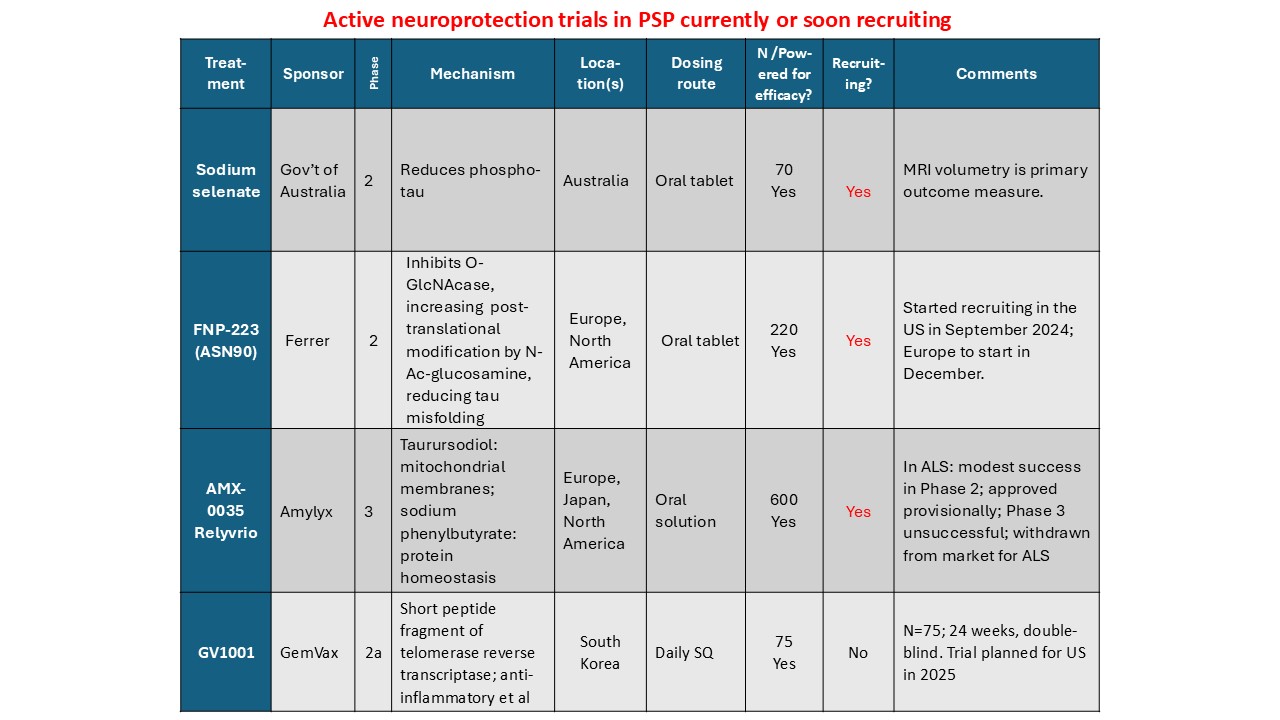
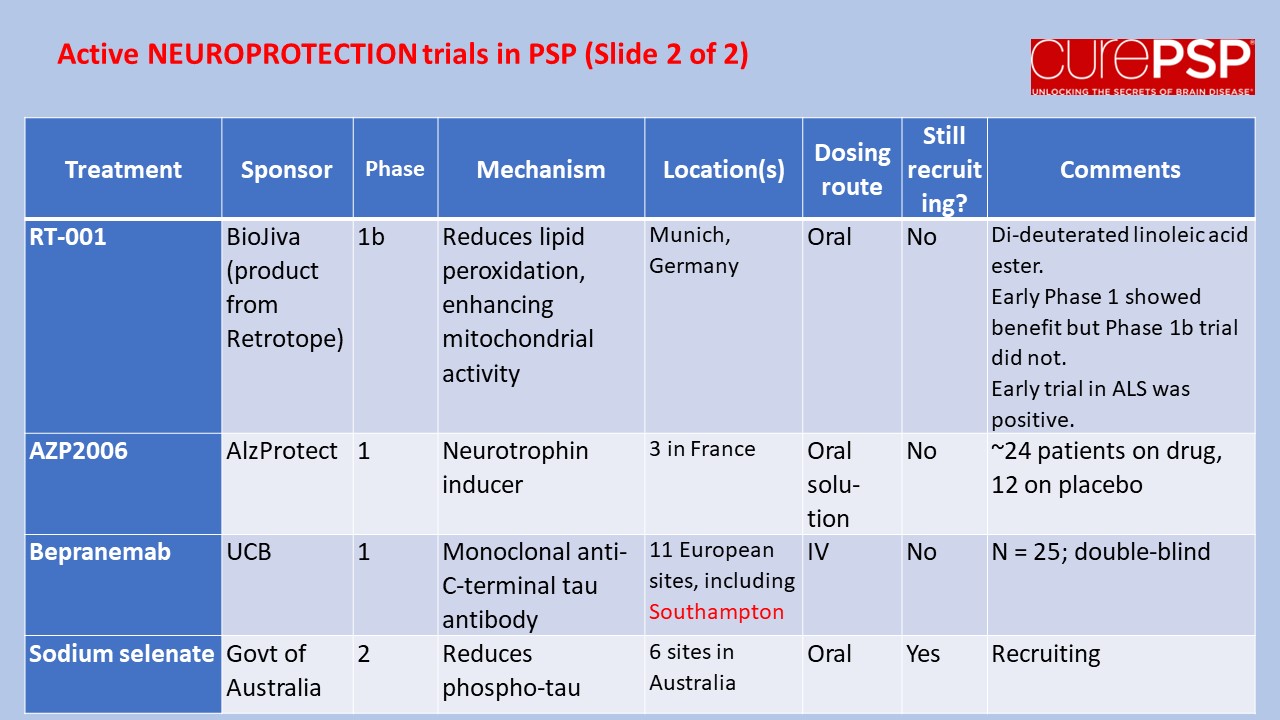
    It’s high time I updated you on currently – or imminently – recruiting PSP clinical trials.

    Here are the four in chronological order. All these are for “neuroprotection,” meaning slowing of the underlying disease process. They don’t attempt to improve the existing symptoms, however. That’s called “symptomatic” treatment and I’ll get around to that soon.

    More details:

    Sodium selenate provides supplemental selenium, which is critical for the function of 25 human enzymes with a wide range of functions. Two are relevant to PSP: glutathione peroxidase 4 and protein phosphatase 2A. The first regulates one type of programmed cell death and the second removes phosphate groups abnormally attached to the tau protein. The trial is happening only in Australia. See here for details, including contact information.

    FNP-223 inhibits an enzyme called 0-GlcNAcase (pronounced “oh-GLIK-nuh-kaze”), which removes an unusual sugar molecule from its attachment to tau. The sugar is called N-acetyl-glucosamine and it prevents abnormal tau from attaching at the same spots on the tau molecule. It’s an oral tablet and the trial, which has just started, will be in both Europe and North America. Click here for details and contact info.

    AMX-0035 is a mixture of two drugs in an oral solution. Both are currently marketed for conditions unrelated to neurodegeneration. The PSP trial has started in North America and will do so in Europe and probably Japan in the next few months. One of the two drugs, called sodium phenylbutyrate (marked as Buphenyl), addresses the brain cells’ management of abnormal proteins. The other, taurursodeoxycholic acid, marketed as TUDCA, helps maintain the mitochondria. Click here for details and contact info.

    Finally, GV-1001 is an enzyme with anti-inflammatory action in the brain. But it’s not like a steroid or non-steroidal anti-inflammatory drug. It acts by an mechanism that the drug company is keeping close to its chest and has something to do with DNA transcription into proteins. The drug has to be injected subcutaneously every day, like insulin. A small trial is in progress in South Korea and in you live there, here’s enrollment info. There are plans to start a trial in the US in 2025, but that could depend on the current trial’s outcome.

    Soon, I’ll post something on neuroprotection trials in which the double-blind recruitment is over but the results are pending. After that will be symptomatic trials.

    With all these trials in progress, CurePSP’s “Hope Matters” tagline is truer than ever.

    Current treatment trials

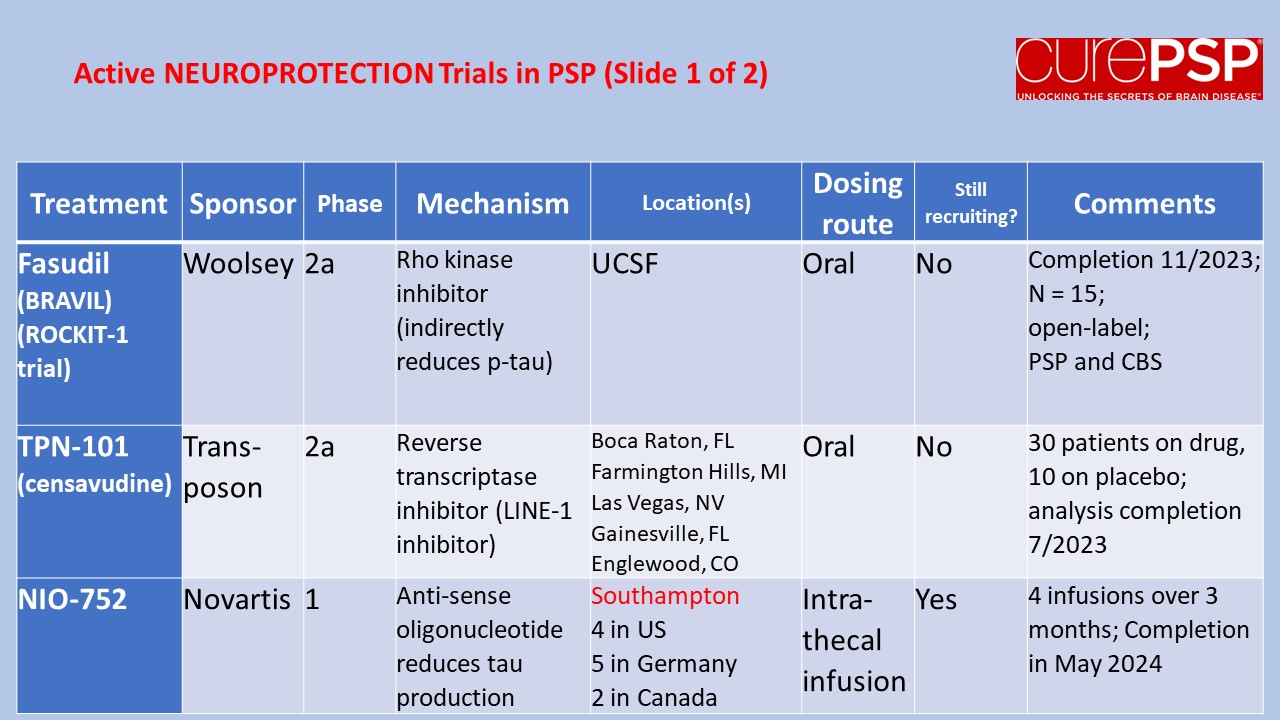
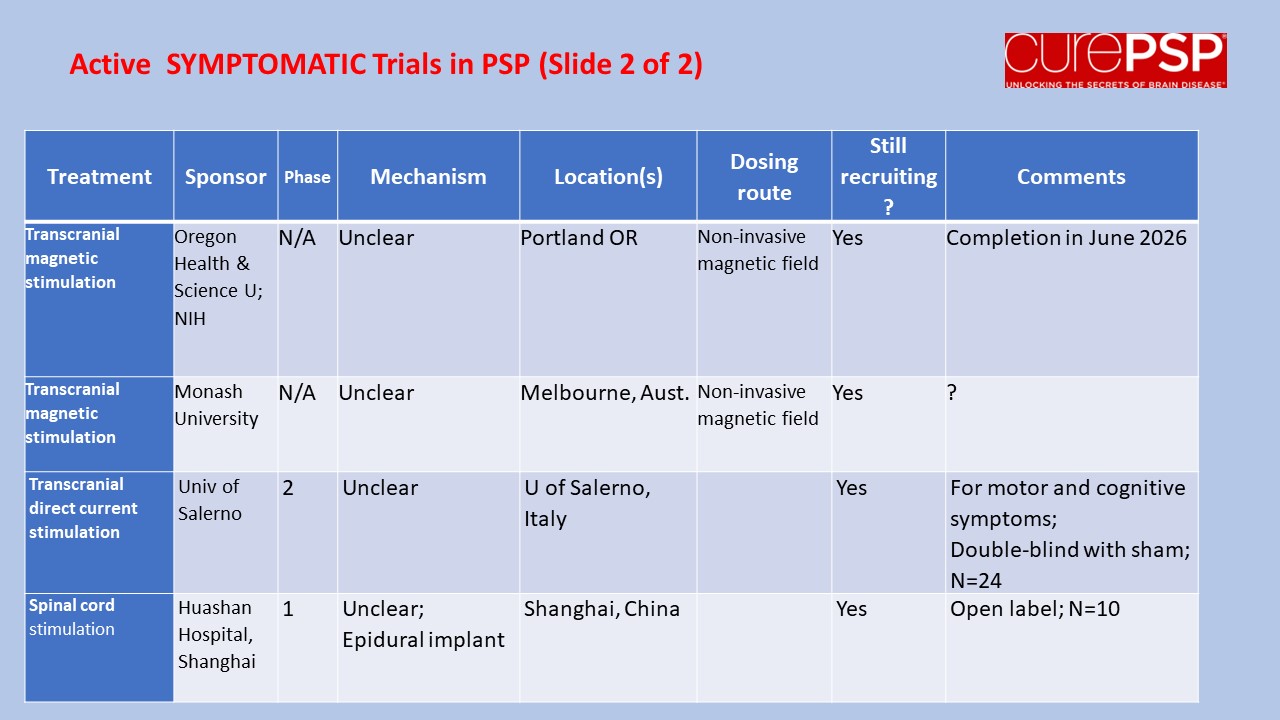
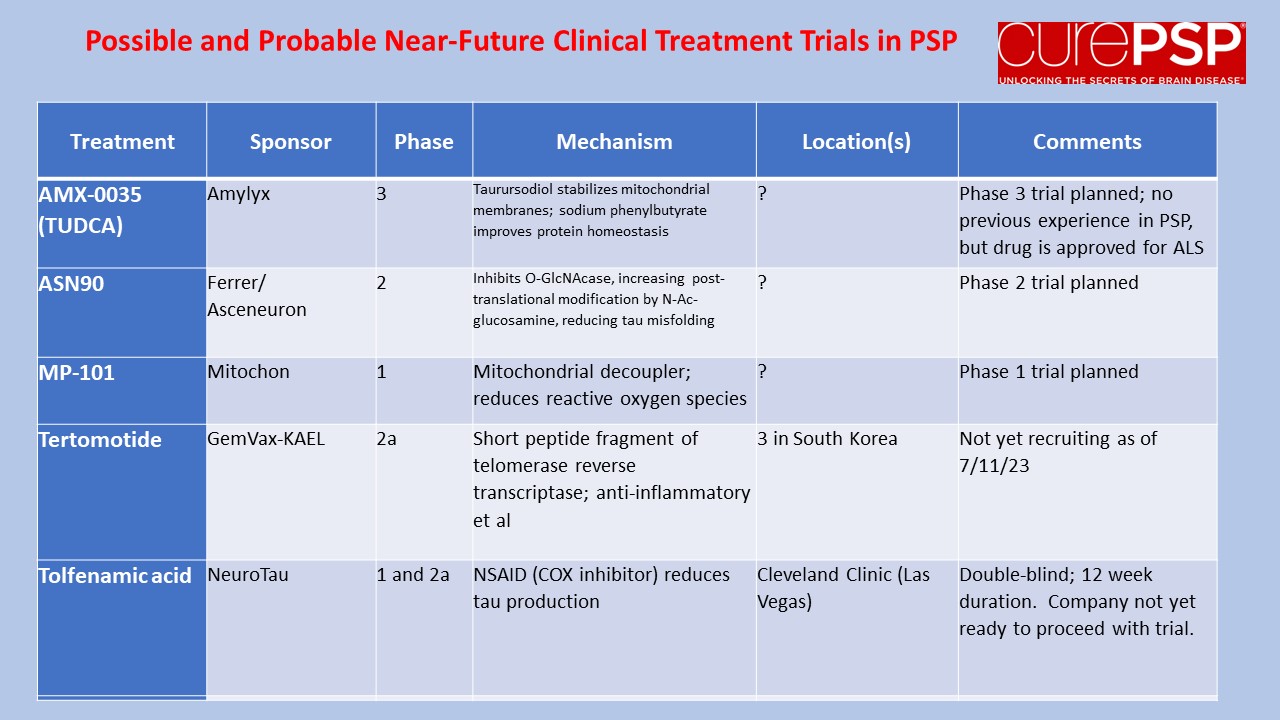
    My last post was a nerdy list of pathogenetic mechanisms in PSP along with the statement that treatments to address most of those mechanisms are in the clinical pipeline. One of you wrote in to kick me out of my lofty, scientific detachment, asking just what those treatment candidates are. So here’s a list.

    The first four panels are active trials and the last is future trials.

    The first two and last panels show neuroprotection trials (i.e., to slow disease progression).

    The third and fourth show symptomatic trials (i.e., to help the symptoms without affecting the underlying disease process).

    For current information on how to enroll, visit clinicaltrials.gov and search on the drug and/or sponsor and/or “progressive supranuclear palsy.”

    We can dream, can’t we?: An unscientific survey

    Here’s a hypothetical question for you all:  How effective does a neuroprotective drug have to be for you to want to use it?

    What prompted this question is the recent FDA approval of a new drug to slow the progression of ALS (Lou Gehrig disease).  It gives the patient, on average, 25% more survival time.  Now, suppose a drug to slow the progression of PSP provided the same benefit?

    The average person with PSP received the correct diagnosis about 3½ years after the first symptoms appear and, with currently available treatment, die an average of 4 years later.  So if a new drug slowed the progression by 25% and is started immediately after the diagnosis of PSP is made, then that 4 years becomes 5 years – not much of an improvement, but better than nothing.

    The cost of Relyvrio for ALS is $158,000 per year.  The cost of Aduhelm, which was approved last year for slowing the progression of Alzheimer’s disease, is $28,000.  Let’s say our hypothetical PSP drug splits this difference, at $93,000.  We don’t know how much of that would be covered by the various drug insurance plans, and of course, not everyone has drug insurance. 

    Let’s assume that the hypothetical PSP drug has no important side effects and that it requires a monthly intravenous infusion lasting 2 or 3 hours.  (Some of the experimental PSP drugs are just oral pills and one is an injection every 3 months into the spinal fluid, as for a spinal tap.)

    So, my question boils down to this:  Would you opt to receive this PSP drug with a 25% slowing benefit – or not?  The benefit to the average patient would be one more year of survival – more for some, less for others. 

    A point in favor: The drug wouldn’t just prolong the final year, when the person is most disabled.  Rather, it would prolong each year of those 4, so that the first year’s mild level of disability would persist for 15 months rather than 12, and so on.

    Two points against: 1) You’d have to take the drug for the rest of your life, or until something better came along. 2) Future participation in a clinical trial of a potentially better drug might not be allowed for people already on another PSP-protective drug.

    Any thoughts for my highly unscientific survey would be appreciated.  Click “Leave a comment” just below this line.  Feel free to explain your thinking.

    PSP treatments in or near human trials

    When a patient or caregiver asks me if anything can be done for PSP aside from palliative measures, my ready answer is that there’s a lot of research now into specific treatments that might slow or halt disease progression. I never have time to get into details in the time available, so I’m not sure my assurance is credible. So, putting my keyboard where my mouth is, here is a pretty thorough list of treatments that are in human trials for PSP or will enter such trials this year:

    Anti-tau antibodies: BMS-986168 (Phase 1), C2N-8E12 (Phase 1). Both are in early stages of recruitment at multiple North American sites. The rationale is to bind and destroy abnormal tau en route between brain cells. (Disclosure: I’m a consultant to Bristol-Myers Squibb and a site investigator .) Other drug companies and academic labs are also working on anti-tau antibodies, but at an earlier stage.

    Tau anti-aggregants: Leucomethylthioninium (LMTX). This is a derivative of methylene blue in Phase III for Alzheimer’s and frontotemporal dementia; If successful, PSP could be next. But beware the hype that has accompanied methylene blue and its derivatives.  The results from earlier-phase trials have not been published, which is curious.

    Microtubule stabilizer: TPI-287 (Phase I). This is closely related to the taxane group of cancer drugs. In cancer, stabilizing microtubules helps prevent cells from dividing. In the brain, it compensates for the loss of tau, which normally stabilizes microtubules as the cells’ transport and skeletal system.

    Tau acetylation inhibitor: Salsalate (Phase 1); This is being tested at UCSF, UCLA and UCSD in an open-label “futility” design. In other words, the study will determine not if the drug works, but if it deserves to be tested further. The same drug is being tested for multiple other disorders and has long been on the market as a non-steroidal anti-inflammatory drug.

    Tau aggregation inhibitors: ASN-561, an O-GlcNAcase inhibitor. This will probably enter Phase I in 2016. It acts by promoting the attachment of a sugar molecule, N-acetyl glucosamine, to the tau protein, thereby inhibiting its aggregation. Such “OGA” inhibitors are also being tested for other conditions, including cancer.

    Anti-sense oligonucleotides: These are RNA molecules designed to inhibit the production of 4-repeat tau, which is over-produced in PSP relative to 3-repeat tau. That imbalance could be contributing to tau aggregation. These have not reached human trials.

    Anti-microglial agent: FK506 reduces the activity of microglia, inflammatory cells in the CNS. Evidence is increasing that such inflammation is a cause, rather than an effect, of cell loss in many of the neurodegenerative diseases. In fact, several immune-response-related genes were among the top 10 “hits” in the 2011 study of genetic risk factors in PSP.

    Young plasma: Only in 10 patients, non-controlled and only at UCSF, this study will give plasma from healthy men younger than 30 to patients with PSP. The primary outcome issue is safety and tolerability, but efficacy measures will also be applied. Recruitment is under way. The theory is that some unknown blood-borne molecule in young people prevents them from developing PSP and could slow the process in someone with the disease.

    Mitochondrial nutrient: Coenzyme Q-10 (Two small double-blind studies, one published and one unpublished) show similar modest improvement in PSP Rating Scale scores. This is a symptomatic treatment but the above items on this list are all potentially neuroprotective.

    For more information on any of these, see http://www.clinicaltrials.gov.