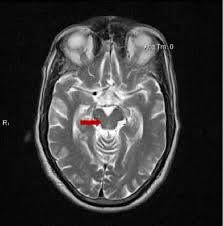
Artificial intelligence and artificial CSF drainage

A common diagnostic problem is distinguishing PSP from normal-pressure hydrocephalus (NPH), but a new way to look at brain MRIs using artificial intelligence could have the solution.  I’ll now administer the usual large dose of background information:

NPH occurs in the same age group as PSP but is much more common.  Its three classic features sound a lot like PSP: frontal cognitive loss, urinary incontinence, and gait impairment.  But those often don’t appear until late in the course and other issues such as general slowness, reduced vertical eye movement and tremor can precede them.  Of course, those also are shared with PSP.

In NPH, the fluid-filled cavities of the brain enlarge and over-stretch the brain’s fibers to produce the symptoms.  The cause of the cerebrospinal fluid (CSF) accumulation in many cases is a partial blockage of its normal absorption into the blood.  In some cases, that appears to be the result of scarring from an old episode of brain infection or bleeding around the brain.  Other cases, called “idiopathic NPH,” have no history of such inflammatory events and their cause remains unknown.  There is also in NPH some evidence of a neurodegenerative component, as in PSP, Parkinson’s, and Alzheimer’s.

A diagnosis of NPH depends less on the clinical history and exam than on two other things: 1) a specific pattern on MRI of brain tissue loss and enlarged CSF spaces and 2) benefit after removal of some CSF.  I’ll discuss those in turn:

A. MRI diagnosis. Below are MRI images from idiopathic NPH (middle row) and PSP (bottom row).  The main differences between PSP and NPH are indicated by the labels on the right.  PSP features widening of the spaces between the brain’s folds caused by atrophy of the brain tissue.  But in NPH, the spaces toward the top of the brain are as tight as, or tighter than, normal.  There are other, less reliable, MRI differences, none of them adequately sensitive or specific for NPH.

B. CSF diagnosis. The other diagnostic feature is the response to CSF drainage.  It’s not just a diagnostic test; it also predicts the likely response to treatment by shunting.  If someone in whom NPH is suspected has an MRI consistent with NPH and no signs of other potential causes of their symptoms, the physician will usually perform a spinal tap to remove about 30-50 ml with before-and-after videos of the gait and other actions. (The average adult has about 100-150 ml at any one time, but the daily turnover is about 500 cc, so the 30-50 ml loss is replaced after only a few hours.)  Some neurologists prefer the greater diagnostic reliability provided by a more prolonged period of drainage via a soft plastic tube temporarily inserted into the lumbar CSF space (the same place where the needle of a spinal tap goes), but this can have complications.

Whichever temporary method of CSF removal is used, a good symptomatic response would prompt consideration of a tube, called a “shunt,” permanently implanted into the brain to direct flow of some CSF, usually into the abdominal cavity.  Of course, implanting such a shunt into the brain can produce complications such as infection or bleeding, so we’d first like to make sure the person doesn’t have PSP, which offers no potential shunt benefit to compensate for that risk.

I should point out that PSP is far from the only disease that can mimic NPH and not respond to shunting.  Among the others are the far more common PD and AD.  That means that only a small minority of “NPH candidates” actually has NPH, so placing brain shunts in all the candidates would be highly inadvisable, to put it mildly. So, it’s important to make the right diagnosis.

Over the decades since 1965, when NPH was first described in the literature, the number of proposed diagnostic methods has been prodigious and none has been sufficiently accurate.  But now, the cavalry may have arrived in the form of AI.  A group of researchers led by Drs. Fubuki Sawa and Syoji Kobashi of the University of Hyongo in Japan has used “convolutional neural networks,” a form of deep learning, to produce a predictive model. It used the most specific and informative MRI features from 59 people with NPH who subsequently benefitted from shunting and 65 people with PSP by current, validated criteria.  The resulting statistical formula produced a perfect score of 1.000 in the area under the curve (AUC) of the receiver operating characteristic (ROC). (Wikipedia has a nice little explanation of that statistic here.  Basically, it’s the ability of a diagnostic test to minimize both false positives and false negatives, with 1.0 being perfect and 0.5 being equivalent to a coin toss. Its virtue is that it’s applied to an individual, not merely to the averages of two groups.) 

Perhaps easier to intuit is the test’s accuracy, according to Sawa et al, of 0.983.  That statistic is formally defined as the fraction of all the participants who received a correct diagnosis from the formula. Such power for a diagnostic test is nearly unheard-of in medicine, but keep in mind that the definition of NPH in this study wasn’t autopsy, but an MRI showing the typical features plus a response to CSF shunting.  So that means that the input and outcome variables were partly redundant, inflating the accuracy to some extent.

The other caveat is that this technique only distinguished PSP from NPH, not from PD or anything else.  But the general AI-based statistical technique should be applicable to many kinds of diagnostic situations where the two candidate diseases cause atrophy in different parts of the brain.  We eagerly await those papers from Drs. Sawa and Kobashi, and we hope, others.

The take-home if you’re someone with PSP:

  1. Should people with a diagnosis of PSP get a new MRI each year in the hope that a pattern of NPH will emerge and a shunt procedure confer improvement?  Probably not, because an MRI showing the abnormalities of PSP won’t change into the abnormalities of NPH over time.   
  2. Should people with PSP get a shunting procedure just in case they actually have NPH?  Definitely not, as the risk of both short- and long-term shunt complications far exceeds the likelihood of benefit.
  3. Instead of either of these: Keep hydrated and well-nourished, avoid falls and aspiration, minimize unnecessary medications with your doctor’s advice and consent, get some exercise, maintain a social life, and join an FDA-approved clinical trial if one is available.
  4. Also, consider getting a second diagnostic opinion from a neurologist subspecializing in movement disorders, who can scrutinize the original MRI for evidence of NPH that might have eluded the original neurologist or radiologist.

    The take-home if you’re a neurologist:

    At each follow-up visit or phone call, keep in mind the possibility that the diagnosis may not actually be PSP, but something much more treatable — like NPH. Then, work up or refer accordingly.

    The cutting edge (part 1 of 2)

    Here’s the first of two installments summarizing the original, PSP-related research presentations at the annual conference of the International Parkinson and Movement Disorder Society held in early October 2025 in Honolulu. 

    The listing is in no particular order and each is followed by my own editorial opinion.  I’ve culled the 29 PSP-related presentations down to the twelve I considered most interesting considering both their scientific importance and their potential interest to this blog’s readers. 

    Clinical Deficits, Quality of Life and Caregiver Burden across PSP Phenotypes

    A. Cámara, I. Zaro, C. Painous, Y. Compta (Barcelona, Spain)

    Caregiver burden is greater for PSP-Richardson syndrome than for other PSP subtypes, and quality of life showed a statistically non-significant trend for PSP-RS as well.  This information may be useful in counseling patients and caregivers.

    LG comment: This result would be expected given the rapid progression of PSP-RS and its high prevalence of falls and dementia relative to most other PSP subtypes.  The study importantly points out that caregiver burden receives too little attention from clinicians, researchers, policy planners and insurors.

    Clinical Features Suggestive of Alpha-Synucleinopathy in Progressive Supranuclear Palsy

    C. Painous, A. Martínez-Reyes, J. Santamaria, M. Fernández, A. Cámara, Y. Compta (Barcelona, Spain)

    Rapid eye movement behavioral disorder and reduced ability to smell are known to be very common in Parkinson’s disease and other alpha-synuclein-aggregating disorders but also occur to some extent in those with PSP.  All of this study’s patients with PD and 10% if those with clinically typical PSP had a positive spinal fluid alpha-synuclein seeding amplification assay (SAA).

    LG comment: The new SAA test is not perfectly specific for synucleinopathies and could produce a false positives in people with PSP.  The same is true for RBD and reduced smell sensitivity.

    Identification of Genetic Variants in Progressive Supranuclear Palsy in China

    Y. Kang, W. Luo (Hangzhou, China)

    Pathogenic or likely pathogenic variants consistent with their respective inheritance patterns were detected in 20% (8/40) of patients: three carried PSP-related variants (CCNF, DCTN1, POLG), while five harbored variants in neurodegeneration genes linked to PSP-like phenotypes (AARS1, TDP1, FA2H, TBP, ATXN8).  The controls were only historical controls from the literature.

    LG comment: This list of genetic variants, each conferring a very slight increased PSP risk, differs from the lists reported in Western populations, which also have important differences from one another.  The differences could be related to geographically or culturally related environmental contributions (which need different genetic backgrounds to cause damage) or to differences in laboratory methods or choice of non-PSP control populations.

    Unraveling the Genetic Architecture of Progressive Supranuclear Palsy in East Asians

    P. Chen, R. Lin, N. Lee, J. Hsu, C. Tai, R. Wu, H. Chiang, Y. Wu, C. Lu, H. Chang, T. Lee, Y. Chang, C. Lin (Taipei, Taiwan)

    Using a Taiwanese population, this study identified three likely pathogenic variants, in the genes called APP and ABCA7, and the mitochondrial genome.  It also found 39 variants of unknown significance in 37 PSP patients (20.9%), involving  other genes, many of which were already known to confer slight risk for PSP.   

    LG comment: The difference in apparent genetic risk factors between Shanghai (previous abstract by Kang et al) and Taiwan underscores the possibility of differences in methodology, although ethnic differences between those two geographical areas could be contributing.  Genetic study of PSP in East Asians could benefit all ethnicities by identifying previously unsuspected cellular pathways involved in the disease.

    Multimodal imaging Integrating 18F-APN-1607 and 18F-FP-DTBZ PET in Progressive Supranuclear Palsy

    C. Dong, J. Ma, S. Liu (Beijing, China)

    Several kinds of positron emission tomography (PET) imaging are being tested for their ability to accurately diagnose PSP.  Two of them were applied concurrently to a group of 20 participants with PSP and a control group.  One, called 18F-APN-1607, shows abnormal accumulation of the tau protein and the other, called 18F-FP-DTBZ, images the neurons that use dopamine.  The result was that 16 of the 20 were correctly identified by the 18F-APN-1607 and three of the other four were identified by the 18F-FP-DTBZ as being probable Parkinson’s disease.  The conclusion is that performing both types of PET could provide more accuracy than the tau PET alone in distinguishing PSP from PD.

    LG comment: This result is consistent with the age-old medical principle that there’s no such thing as a perfectly accurate diagnostic test.  Two or more tests measuring different aspects of the same disease can work in a complementary manner to improve diagnostic accuracy.  Fortunately, PET is a nearly harmless, nearly painless test.  Its main drawbacks are time, expense and insufficient availability of many kinds of PET outside of referral centers.

    Levodopa response in pathology-confirmed Parkinson’s Disease, Multiple System Atrophy and Progressive Supranuclear Palsy

    V. Arca, J. Jurkeviciene, S. Wrigley, P. Cullinane, J. Parmera, Z. Jaunmuktane, T. Warner, E. de Pablo-Fernandez (London, United Kingdom)

    About one in three people with PSP experiences some degree of benefit on levodopa, a statistic that prompts most neurologists to give that drug a try.  However, the benefit is often short-lived.  To measure this in a formal way, these researchers reviewed the medical records of autopsy-confirmed patients with PSP, PD or MSA.  Those responding well for over two years were 2% of those with PSP, 86% of those with PD and 8% of those with MSA.

    LG comment: The short duration of useful benefit from levodopa in PSP means that each patient enjoying a benefit after the drug initiation should be re-evaluated at each subsequent visit for a continued benefit.  As levodopa can have long-term side effects such as low blood pressure, hallucinations and involuntary movements, a dosage taper carefully monitored by the physician should be considered after the first year or so of treatment.

    “A little duloxetine to loosen my tongue”

    The drug duloxetine, marketed under the brand name Cymbalta, was originally developed for depression or anxiety but is now prescribed mostly for pain management.  An article from neurologists in Russia and Malaysia now reports that three people with PSP who were receiving duloxetine for their mood issues experienced important, unexpected improvement in their speech. 

    The article’s first author is Dr. Oybek Turgunkhujaev of the Semeynaya Clinic in Moscow and its senior author is Dr. Shen-Yang Lin of Universiti Malaya in Kuala Lumpur.  Unfortunately, the journal, Movement Disorders Clinical Practice, is not open-access and because it’s only a brief article, there is no abstract in PubMed for me to link to.

    The mechanism of action duloxetine is to enhance the action of the neurotransmitters serotonin and norepinephrine by blocking the brain cell’s ability to re-absorb those molecules from the synapse.  That’s a standard way for brain neurons to regulate and sharpen its signals to other neurons.  That process is called “reuptake” and you’ve probably heard of the SSRIs or selective serotonin reuptake inhibitors. Duloxetine works on norepinephrine as well as serotonin, so it’s an SNRI.   Other SNRIs in common use include venlafaxine (Effexor) and desvenlafaxine (Pristiq). The figure below shows the mechanism of action of duloxetine and venlafaxine. 

    Nerd alert: This mostly takes place in the pons, specifically the locus ceruleus (for norepinephrine), raphe nuclei (for serotonin), but to a lesser extent in prefrontal cortex of the cerebrum (both norepinephrine and serotonin).

    The journal article is accompanied by before-and-after videos of two of the three patients.  They all had difficulties not only with slurring, but also with difficulties initiating speech and stuttering.  The delay to onset of the drug’s benefit is described only as “within weeks.”  All three patients also experienced an improvement in their mood, which could have been a direct effect of the drug on the natural reaction to their improved ability to speak.

    The authors do a good job of describing how the drug’s known mechanism of action might address the parts of the brain that when impaired, are known to cause those symptoms.  But they also recognize that the general alerting and energizing effect of duloxetine could explain the result as well.  Placebo effect seems unlikely, as the durations of benefit were too long: “> 3 months,” “15 months until death” and “>5 months.” 

    Bottom line: This is encouraging and I hope further reports of duloxetine in PSP from other centers are forthcoming. BUT . . . and MEANWHILE . . .

    Physicians considering prescribing duloxetine off-label for speech problems in PSP should be aware that it can have important side effects and drug/dietary interactions.  I can’t get into those here, but they are described in detail in the 31-page FDA-approved package insert and its one-page summary. Needless to say, there has been no formal trial of duloxetine in PSP, so that population could have different/additional/worse side effects relative to the mostly younger people in the depression and pain trials on which the package insert was based. 

    Posts from an outpost

    A colleague and co-author of mine, Michiko Kimura Bruno, MD, has started a blog that might interest you. Its platform is the Psychology Today site and its very cool overall topic is neurological disorders from the psychological standpoint. Dr. Bruno alerted me to this because the third post is about PSP.

    Dr. Bruno is an academic movement disorders specialist, like me, but in Hawaii, not New Jersey. (No jokes, please.) She works at The Queen’s Medical Center, which is affiliated with the John A. Burns School of Medicine at The University of Hawai’i at Mānoa, where she is Professor of Neurology. She directs CurePSP’s Center of Care at her institution. To date, Dr. Bruno is author or co-author of eight peer-reviewed papers on PSP, five of which are about its social or psychological aspects. Take a look.

    Michiko K. Bruno, MD

    PSP meets metaphenomic annotation

    Back in the 19th Century, diagnosing brain disorders relied mostly on listening carefully to the patient’s history, performing a detailed neurological examination, and knowing what previous, similar patients turned out to have at autopsy.  That approach remains important, but since the early 20th Century, chemical, electrical and imaging tests have replaced it to a great extent.  But now, neurologists at one of the world’s most prestigious medical centers, the Queen Square Institute of Neurology at University College London, have turned back the clock.

    The researchers were motivated by the failure to date of modern techniques short of autopsy to provide a sufficient level of diagnostic certainty for the atypical Parkinsonian disorders.  So, they squeezed some more value out of the traditional approach.  First, they reviewed 125 publications since 1992 describing a total of 5,748 people with Parkinsonian disorders of various types and a diagnostic answer at autopsy.  Those proven diagnoses were Parkinson’s disease (30%), PSP (23.5%) multiple system atrophy (16.8%), dementia with Lewy bodies (6.0%), corticobasal degeneration (4.6%).  There was also a large group called “others” (19.6%), who mostly had Alzheimer’s disease, which in its advanced stages can acquire stiffness and slowness and look “Parkinsonian.”  Keep in mind that the sources of these numbers were specialized academic referral centers, where the atypical Parkinsonian disorders would be over-represented.

    Led by first author Dr. Quin Massey and senior author Dr. Christian Lambert, the researchers invented a new statistical technique called “metaphenomic annotation,” which involved feeding the 125 journal articles into commercially available text-mining software to tabulate the patient’s lists of symptoms against the autopsy results.

    Etymology lesson of the day: “Meta” means “beyond,” in this case beyond the confines of a single published study.  “Pheno” means “outward appearance,” in this case the features of the disease during life.  “Phenomics” means a large collection of such features, analogous to “genomics” as a large collection of genes. “Annotation” in this case means somehow managing to shoehorn all that data from disparate sources into a usable database.

    They found that among the 1,195 people with PSP diagnosed during life, the autopsy diagnosis was PSP in 89.5%, PD in 3.0%, CBD in 2.5%, MSA in 1.3%, and “other” in 3.7%. Among the 1,349 people whose autopsy showed PSP, the diagnosis during life was PSP in 79.3%, PD in 8.5%, MSA in 5.6%, CBS in 3.6%, DLB in 0.2% and “other” in 2.7%.  The graph below shows the corresponding numbers for all five conditions and the “others” group. The curving bands show how the diagnoses made during life (the “clinical cohort” on the left) were corrected by autopsy to the diagnoses (the “histological cohort” on the right).  (“Histology” is the study of body tissues through the microscope.)

    Figure and table from: Quin Massey, Leonidas Nihoyannopoulos, Peter Zeidman, Thomas Warne, Kailash Bhatia, Sonia Gandhi, Christian Lambert. Refining the diagnostic accuracy of Parkinsonian disorders using metaphenomic annotation of the clinicopathological literature. NPJ Parkinsons Disease 2025 Nov 10;11:314.

    If you think the figure above is information-rich but a bit confusing, the table below may be more of both.  Each of the five rows is labeled with a disease defined by autopsy, and each column represents how that disease compares with each of the other four with regard to diagnostic signs during life.  For example, for assistance in distinguishing PSP from MSA, look at the third row, second column, where square waves (an abnormal eye movement) are listed as being more common in PSP.  The number in parentheses is the ”positive likelihood ratio” for distinguishing PSP from MSA.  The PLR is calculated as (sensitivity / (1-specificity)) and can be informally described for this example as how much more likely is PSP than MSA to be the correct diagnosis, based on just this one diagnostic feature.

    This analysis can be very useful for the vast majority of neurologists and mid-level neurological professionals unfamiliar with the details of the differences among the atypical Parkinsonian disorders.  Even experienced movement disorders neurologists will find it useful to have all this information in one place and neatly quantified.

    A great part of this project is that the researchers have made the annotated data and their computer code publicly available for the use of other researchers.

    Jesse Jackson

    The Rev. Jesse L. Jackson, Sr., the civil rights leader and political activist, has announced that his 2017 diagnosis of Parkinson’s disease has been changed to PSP.

    I have no inside information on the details of Rev. Jackson’s condition, but I can tell you that this is a common scenario for people with the second-most-common type of PSP, called PSP-Parkinsonism (PSP-P).  It accounts for about 15% to 35% of all PSP, depending on the source of the data, and starts out looking like Parkinson’s disease (PD), typically with asymmetric stiffness of the limbs and often a tremor, without much cognitive, eye movement or balance difficulty.   The symptoms, like those of PD, usually respond to levodopa, though not quite as well or for as many years. 

    PSP-P progresses at a rate typical for PD, not the faster rate for most types of PSP.  The average lifespan of PSP-Richardson syndrome (PSP-RS), which accounts for about 45% to 55% of PSP, is about 6 years, while for PSP-P, it’s 9 years and for PSP overall, 7 years.  (The lifespan of people with PD receiving modern treatment averages about 16 years, but many neurologists today don’t know that before levodopa became available in 1970, it was about 9 years, like PSP-P.)

    The typical journey of someone with PSP-P starts with a satisfactory response to levodopa.  But the dosage requirement increases more rapidly and balance problems develop sooner than in PD.  After a few years, the neurologist may suspect one of the “atypical Parkinsonian disorders,” examine the patient more closely than at the previous follow-up visits, find the eye movement problem and frontal cognitive issues of PSP, and change the diagnosis.  Often, this re-evaluation is performed by a second neurologist whose opinion was sought by the patient or family member worried about the atypical symptom course and unsatisfactory levodopa response.

    So, if Rev. Jackson does have PSP-P, he would now be at about the average (i.e., the median) survival duration.  Of course, about half of all people with PSP-P survive past the median, some for as long as a total of 20 years or even more.

    A scientific comment: Keep in mind that PSP-P wasn’t described in the medical literature until 2005 and formal criteria to distinguish among the various (now 10) different PSP subtypes didn’t appear until 2017.  Before then, most people with PSP-P would not have fulfilled the existing formal criteria for PSP, which were published back in 1996.  Therefore, pre-2017 statistics on the prevalence or lifespan of people with PSP refer mostly to PSP-RS, which is the name given in 2005 to what was defined as “PSP” by the 1996 criteria.

    Another scientific comment: PSP-RS, PSP-P and the other 8 subtypes all have the same set of microscopical changes in the brain, featuring neurofibrillary tangles of tau protein and tufted astrocytes.  It’s just the sets of locations around the brain that differ to some extent.  We don’t yet know what causes this “cell-type specificity,” but the best theory is that it’s slight differences in the mis-folding pattern of tau, caused by slightly different locations of abnormal attachment of phosphate groups on the protein.

    And finally, an editorial comment: Almost all clinical drug trials in PSP only accept participants with PSP-RS.  There are several good reasons for that, but that policy excludes half of all those with PSP, raising the theoretical possibility that any resulting treatment may work only in that sub-type.  I’ll discuss potential solutions in a future post.

    Meanwhile, my deepest gratitude to Rev. Jackson for sacrificing some degree of personal medical privacy in the service of increasing public awareness of PSP and my best wishes to him in the journey forward.

    Suggestive eyes

    The current diagnostic criteria for PSP were published in 2017. Unlike the previous standard set of PSP criteria from 1986, this one defined not only “possible PSP” and “probable PSP,” but also a new, lower level of certainty called “suggestive of PSP.”  That applied to people with PSP features insufficient to satisfy the “possible” criteria.  It was designed to maximize sensitivity at the likely cost of specificity.  Both the 1986 and 2017 sets of criteria defined “definite PSP” as requiring autopsy confirmation.

    For PSP-Richardson syndrome, the most common of the 10 PSP subtypes, the critical difference between “suggestive of” and “possible” relates to eye movements. The former has no restriction or slowing of eye movement, but does have either square-wave jerks (rapid, irregular, low-amplitude, horizontal jerks of the eyes when staring straight ahead, separated by very brief pauses) or difficulty opening the eyes (also called “blepharospasm”).  Both “suggestive of” and “possible” PSP-Richardson also require at least a bit of balance loss.

    The PSP research group in Barcelona, one of the world’s leading such projects, maintains a longitudinal registry and observational study.  Like most longitudinal studies, it gathers detailed information about the participants at the time of enrollment and periodically thereafter, seeking ways to use one to predict the other — diagnostic and prognostic markers. 

    The group’s latest project was headed by Celia Painous, MD PhD, a post-doc working under senior author Yaroslau Compta, MD PhD.  It enrolled 131 participants with PSP, 12 with Parkinson’s disease and 18 healthy people as controls.  Of those with PSP, 23 had “suggestive of” criteria for one of the PSP subtypes (mostly PSP-Parkinsonism) and 108 met “possible” or “probable” criteria (mostly PSP-Richardson syndrome).

    The testing included not only the standard history and physical exam for PSP but also a blood test for neurofilament light chain (NfL) and several tests in spinal fluid:  alpha-synuclein seed amplification assay (asyn-SAA), neurofilament light chain (NfL), total tau (t-tau), tau with a phosphate at amino acid 181 (p-tau), and beta amyloid (Aβ42).  All of these have been proposed as diagnostic markers for PSP or other tauopathies.

    The testing also included something unusual for this type of project – a precise test of eye movement termed “video-oculography.” The participant sits comfortably at a desk, resting chin and forehead against rigid supports, as at the optometrist’s office.  They perform  visual tasks shown on a computer screen while a video camera records the movements. The images below are from a technical article on the device.  If you read it, keep in mind that it was written by the manufacturer’s employees as a marketing tool.

    The visual tasks used a bright dot in the middle of the screen as a starting point and other dim dots that could light up.  For most of the tests, the person was instructed to look as quickly as possible from the starting point to other dots as they lit up in turn.  The device measured delays in starting the movement, speed, undershoot, and overshoot.  The procedure also required the participant to perform “anti-saccades,” where they’re told to move their eyes not to the dot that just lit up, but to a different dot that remains dim, situated in exactly the opposite direction from the starting point.  This can be performed in any of the four directions of gaze. It tests the ability to follow instructions and to resist one’s natural inclinations, both of which are impaired early in PSP and other disorders of the frontal lobes.

    Sure enough, compared with the subjects with PD and the controls, the group with “suggestive of” PSP at the first visit showed more errors than the PD or healthy control groups in the anti-saccade task in the vertical directions, with greater delay in responding and slower movement.  It’s true that the duration of the “suggestive” PSP symptom(s) in that group was four years.  Still, the fact that only very minimal signs of PSP were present shows that the disease was in a very mild stage.  We can therefore hope that a harmless, painless, inexpensive, sensitive test for abnormalities on the anti-saccade task could provide a very early marker for PSP.  

    Before long, we may see such a test added to research protocols seeking people with PSP before clear, overt symptoms develop.  That would be very useful in studies of genetic or environmental risk factors, where groups with and without the risk factor are compared with regard to the incidence of PSP.  It’s likely that for work with PSP, video-oculography could be combined with other markers to provide fewer false positives.

    The atypicals go to Washington

    Well, this week started in an interesting and I hope productive way.  CurePSP arranged for some of its Board members, including myself, to meet with staff of two U.S. Senators and six members of the House on October 27, 2025.  The goals were not to support any pending legislation, but to:

    • Raise awareness in Congress about PSP, MSA and CBD (the three leading “atypical Parkinsonian disorders”),
    • Emphasize the importance of maintaining and expanding Federal involvement in research and care for PSP, MSA and CBD.   
    • Encourage support for the upcoming recommendations of the advisory council established under 2004’s National Plan to End Parkinson’s Act (NPEPA).  That act created a group from multiple stakeholders to coordinate and advise the Federal Government on Parkinson’s research.  Thanks in part to CurePSP’s lobbying efforts, the NPEPA covers not only PD, but also PSP, MSA and CBD.

    We split into two teams of six, each of which met with a legislative aide for one Senator and three Representatives.  Each 30-minute meeting included one neurologist (the other being Dr. Alex Pantelyat, a CurePSP Board Member from Johns Hopkins University), three or four other CurePSP Board members, and one person from Faegre Drinker, a prominent law/lobbying firm that is helping CurePSP pro bono.  The overall organizer was Jessica Shurer, CurePSP’s Director of Clinical Affairs and Advocacy.

    My team’s four meetings were with staff of Sen. Andy Kim (NJ), Rep. Neal Dunn (FL), Rep. Darin LaHood (IL), and Rep. Troy Balderson (OH).  The other team met with staff of Sen. Eric Schmitt (IN), Rep. Doris Matsui (CA), Rep. Morgan Griffith (VA), and Rep. Diana DeGette (CO).  Of the eight, in case you’re interested, three are Democrats and five are Republicans. 

    Each 30-minute meeting included:

    • A quick introduction to the three diseases and how they differ from Parkinson’s,
    • Some personal anecdotes of the difficulties navigated by the patients and their caregivers,
    • Some description of where the research stands right now, and
    • Our hopes and recommendations regarding the role of Congress in the fight.

    All the staffers were well-trained, energetic, respectful, gracious, and eager to help.  They asked pertinent questions, took notes, and tried to focus on what’s feasible for their boss to do, either behind the scenes or through formal channels.  No one raised any political issues.

    A powerful point of ours came from former Representative Jennifer Wexton of Virginia and NPEPA co-sponsor, who retired last year because of advancing disability from PSP.  She was unable to be part of our meetings but asked Jennifer Shurer to relay the following message to her former colleagues on Capitol Hill: “If PSP happened to me, it could happen to you or anyone.”

    Was this all just political theater?  Maybe to an extent, but that’s how truly meaningful things get started – by grabbing the attention of those in power and educating them on our concerns, even via a junior staffer for a half hour.  We at CurePSP are grateful for the chance to get that ball rolling. 

    ¡Felicidades!

    Today the Spanish drug company Ferrer issued a press release announcing the successful completion of enrollment in the PROSPER study.  That’s the year-long, double-blind trial of FNP-223 that I’ve told you about in September 2025, June 2025, October 2024 and April 2024.  The mechanism of action is to prevent phosphate groups from being attached to the tau protein. 

    Here’s Ferrer’s press release.

    The recruitment required only 11 months, one month less than planned.  Now, the last-enrolled patient will require 12 months to complete the trial and then the data will take a few weeks to be “cleaned.”  (That sounds like scientific hanky-panky, but actually it means tracking down records for missing test results, resolving contradictory information, and getting signatures from all the neurologists on everything.)  Then the statisticians take a couple of months to do their thing, producing a result.  So, we’re talking early 2027.

    I haven’t a clue as to whether FNP-223 is likely to work in slowing the progression of PSP.  I do know that its oral administration is a plus and its mechanism of action at the subcellular level makes sense .  I also know for sure that hope matters!

    [Disclosure: I consulted for Ferrer in their trial design and implementation, but I have no financial stake in the trial’s outcome or the company’s success.]

    A dozen at the cutting edge (part 2 of 2)

    Here’s the second of two installments summarizing the original, PSP-related research presentations at the annual conference of the International Parkinson and Movement Disorder Society held in early October 2025 in Honolulu.  I posted the first installment yesterday.

    The listing is in no particular order and each entry is followed by my own editorial opinion.  I’ve culled the published 29 PSP-related presentations down to the twelve I considered most interesting considering both their scientific importance and their potential interest to this blog’s readers. 

    Oxidative Stress in Progressive Supranuclear Palsy

    P. Alster, D. Otto-ślusarczyk, M. Struga, N. Madetko-Alster (Warsaw, Poland)

    The authors measured the concentration of a marker of oxidative stress called “thiobarbituric acid reactive substances” (TBARS) in the blood of 12 people with PSP-Richardson syndrome, 12 with PSP-Parkinson, and 12 healthy controls.  Although oxidative stress is known to be part of the PSP process in the brain, there has been no attempt to compare PSP subtypes in this regard.  The result was that compared to controls,TBARS levels were high in PSP-P but not in PSP-RS.

    LG comment: Blood tests for TBARS and perhaps other measures of oxidative stress could become a way to distinguish PSP-P from PSP-RS for purposes of clinical trial enrollment.  If further research supports the finding, potential treatments that reduce oxidative stress would become less attractive for PSP-RS and more attractive for PSP-P.  

    Disease Characteristics of the First 100 Participants in the CurePSP Genetics Program Cohort

    C. Obasi, V. Zhao, C. Martinez, S. Scholz, H. Morris, N. McFarland, M. Nance, J. Wang, N. Mencacci, B. Cuoto, T. Foroud, J. Verbrugge, A. Miller, L. Heathers, L. Honig, A. Lang, F. Rodriguez-Porcel, P. Moretti, M. Mesaros, J. Brummet, K. Diaz, A. Wills (Boston, USA)

    The CurePSP Genetics Program is designed to enroll large numbers of people with PSP, CBS and MSA and to use their DNA samples to find genetic causative factors not discovered by previous, smaller studies.  After the first 10 months, 74 volunteers with PSP have enrolled, 8% percent of whom claim to have a living or deceased relative with PSP. 

    LG comment: The authors caution that this project’s stated objective of finding genetic causes of PSP could over-sample people with a positive family history.  On the other hand, some relatives with subtle PSP may have died (without an autopsy) from something else before receiving a correct diagnosis.  So, that 8% could be an under- or an over-estimate.  Enrollment will continue through the end of 2028 and the full genetic analysis should appear in 2029.

    Multiscale Entropy: a New Oculomotor Measure of PSP.

    C. O’Keeffe, A. Gallagher, J. Inocentes, B. Coe, B. White, D. Brien, D. Munoz, R. Walsh, T. Lynch, C. Fearon (Dublin, Ireland)

    The eye movements of PSP are famously reduced in amplitude, but they are also abnormally irregular and complex in a way not evident on a standard neurological examination.  This study used a piece of hardware called “Eyelink 1000+” to measure irregularity (which they call “entropy”) of eye movements during 40 seconds’ viewing of photos of scenery and faces in 24 participants with PSP, 38 with Parkinson’s, and 9 controls. The result was that the irregularity of vertical (up and down) movement in PSP significantly exceeded that in PD and in controls.  Importantly, the degree of eye movement irregularity did not correlate with the overall PSP Rating Scale, suggesting that detectable irregularity could exist even at very low PSPRS scores, at a point in the disease course before a clear diagnosis is possible. The authors suggest that this test could become an inexpensive, non-invasive diagnostic test for PSP valid at even the earliest phase of the illness.

    LG comment: Undoubtedly, larger studies will allow calculation of reliable diagnostic statistics such as the “area under the receiver operating characteristic curve” for this test. Equally undoubtedly, the result will be less than perfect. But perhaps this can be combined with other measures of eye movement at the same testing session to provide a combined “PSP eye movement index” with close to 100% sensitivity and specificity.

    Spatial Metabolic Covariance Networks in PSP: Implications for Symptomatology and their Neural Basis

    B. Wang, W. Luo (Hangzhou, China)

    Spatial independent component analysis (ICA) is a statistical technique for finding patterns in images.  This project analyzed FDG PET scans, a map of energy production in the brain, to characterize specific networks of interacting areas that go wrong in PSP. They compared 85 participants with PSP with 70 healthy controls, finding three areas with energy production correlated with aspects of PSP disability. They are a) the dorsomedial thalamus-medial prefrontal cortex (dmT-mPFC) network, causing gait and balance loss; b) the posterior cingulate cortex-lateral prefrontal cortex (PCC-LPFC) network, causing cognitive loss, stiffness and slowness; and c) the putaminal network, causing overall motor control loss.

    LG comments: Understanding which sets of brain cells are affected worst in PSP could allow intelligent targeting of future treatment techniques such as deep-brain stimulation and transcranial (i.e., through the intact scalp and skull) magnetic or electrical stimulation.

    Validation of the Short Progressive Supranuclear Palsy Quality of Life Scale in PSPNI

    Q. Shen, XY. Li, J. Wang, FT. Liu (Shanghai, China)

    The PSP Neuroimaging Initiative (PSPNI) is a large, long-term, observational study based in Shanghai, China that investigates far more than just imaging.  Since the 2024 publication by a German group of a short, easy version of the PSP Quality of Life Scale (PSP-ShoQoL), the PSPNI has been investigating its properties.  They now report that the information value of this 12-item scale is similar to that of the original, 46-item version, and its sensitivity to change over a year’s time was good.

    LG comment: The FDA has made it clear that a new drug’s ability to improve patients’ quality of life is an important consideration in their approval decisions.  While a more global scale featuring objective neurological findings (such as the PSP Rating Scale or its abridged versions) will continue to serve as the “primary” outcome measure in PSP neuroprotection trials, I expect the new PSP-ShoQoL will soon become first among the “secondary” outcome measures.  (The FDA may base an approval decision on the secondary outcome measures if the result on the primary is good but not dramatic. Similarly, it could approve a drug with multiple favorable secondary measures even if the primary result is borderline.)

    Plasma Tau-Species-Containing Neuron-Derived Extracellular Vesicles as Potential Biomarkers for Progressive Supranuclear Palsy

    YC. Zheng, HH. Cai, WY. Kou, ZW. Yu, T. Feng (Beijing, China)

    Neuron-derived extracellular vesicles (NDEVs) are tiny pieces of brain cells that break away and may enter the spinal fluid or bloodstream.  As tiny, encapsulated “samples” of the parent cell’s contents, NDEVs have been investigated as a sensitive way to measure the molecular contents of those cells.  This project measured concentrations of tau, 4-repeat tau (the kind of tau in the tau tangles of PSP), and tau with an abnormal phosphate at amino acid number 181 (ptau181) in NDEVs in the blood.  The statistical model incorporating these biomarkers yielded an AUC of 95% for distinguishing PSP patients from healthy controls, with a sensitivity of 97% and specificity of 85%, and an AUC of 95% for distinguishing PSP from PD. (The AUC, or area under the receiver operating curve, is a measure of the ability of a single person’s measurement to determine the presence or absence of the corresponding disorder.  An AUC of 100% is perfect, 50% is no better than a coin toss, and over 85% is considered good enough for most purposes.) 

    LG comment: These AUCs in the mid-to-high 90s are superb, but so far, assays of NDEVs are technically tricky and not ready for the prime time of regular clinical care.  But I predict that commercial availability will follow soon after other labs confirm this impressive result and extend it to distinguishing PSP not just from PD and controls, but also from CBD, FTD, Alzheimer’s disease and dementia with Lewy bodies.