Reports from the front

Last week the International Parkinson and Movement Disorder Society held its annual meeting – by Zoom, natch.  (A pity – in normal times, that meeting is held each year in a different, interesting international city, letting us append a culturally-oriented vacation to a consistently great conference.  But COVID has done far worse to others, so I shouldn’t complain, and the Zoom format allowed clinicians working in remote or poor countries to participate, a major plus.)

There were 1,320 original research presentations, all in the form of posters.  Of those, 37 came up in my search on “progressive supranuclear palsy.” Presented now for your delectation, in random order, are summaries of the top five presentations of original research in PSP along with my own take on their importance and implications: 

  • Imaging/Gait Correlates: 

A group from the Mayo Clinic led by Dr. Irene Sintini performed detailed gait analysis in 19 people with PSP and imaged their brains in three ways: non-contrast MRI (looking for atrophy in specific areas), diffusion tensor imaging (an advanced MRI technique showing fibers connecting the various parts of the brain and the speed of fluid slowly flowing through in them), and flortaucipir PET (showing tau aggregation, a research technique not quite ready for routine clinical diagnostic use in PSP, but working quite well for Alzheimer’s).  Then they looked for associations among the gait and imaging measures.    

They identified two general patterns of association:  One was that better gait velocity, stride length, and gait stability were associated with larger frontal lobe volumes and less flortaucipir uptake in the precentral gyrus, which is a part of the frontal lobe that controls movement.  The other was that worse postural imbalance was related to greater flortaucipir uptake in the left paracentral lobule, which helps control movement and sensation on the right side as well as bowel and bladder function.

Admittedly, this was kind of a “fishing expedition,” an unkind term we use for a research project that’s just looking for patterns of abnormalities without a specific hypothesis in mind.  But that’s how the process leading to eventual breakthroughs can begin.  In this case, associating specific gait-related abnormalities of PSP with specific brain regions could point the way to deep-brain stimulation techniques, cell replacement therapies, or transcranial (i.e., non-invasive, painless) magnetic or electrical stimulation treatment.  Besides, who knows what gene therapy might come along in a few years to take advantage of this groundwork in some still-undreamt-of, anatomically-directed way?

  • Diagnostic MicroRNA:

Dr. Ravi Yadav and colleagues at India’s National Institute of Mental Health and Neurosciences in Bangalore compared microRNA in plasma (blood without its cells) from 18 patients with PSP and 17 healthy controls matched for age and sex.  They used a type of polymerase chain reaction (PCR) test that, unlike PCR for forensic purposes or COVID testing, provides quantitative measurements.  MiRNA regulates many things in cells, acting much like enzymes.

They found five kinds of miRNA where the difference between PSP and controls was large enough to serve as a diagnostic test.  A commonly used measure of the ability of a diagnostic test to work well at the individual level rather than merely to distinguish groups by their averages is called the “area under the receiver operating characteristic curve” (AUC).  A good AUC is at least 0.8, with a perfect test being 1.0.  These five miRNAs’ AUC’s ranged from 0.78 to 0.86. 

This is promising, and if refined and perhaps combined with another moderately accurate test, could provide an excellent test for PSP.  But first, we need replication in a larger study and a different lab; PSP has to be compared by this test to other neurodegenerative disorders, not just to healthy controls; and cases with early, diagnostically-equivocal signs of PSP should receive this test and then be followed until a diagnosis declares itself.

  • Astrocyte Proteomics:

Astrocytes are the main type of glial cells in the brain.  They are largely non-electrical but perform many supportive functions for the neurons and may actually process information.  They are where the abnormalities of PSP start.  These cells don’t normally make tau but they can accumulate it in the tauopathies, and their resulting appearance, called “tufted astrocytes,” is the pivotal diagnostic feature of PSP through the microscope. 

Dr. Felipe Ravagnani and co-workers from the University of São Paolo, Brazil were interested in what genes are expressed into protein more intensively in such cells from patients with PSP relative to the same cells from healthy controls.  You can’t take astrocytes from a living person’s brain, so they created them in a dish by taking fibroblast cells from the lowest layer of a skin biopsy from each subject and treated them with various things to first remove their skin specializations and to become stem cells.  Then they treated with other things to turn them into astrocytes and compiled and compared the proteins in PSP-patient-derived astrocytes to those from controls.

Such a technique ordinarily produces a long list of differences that’s hard to draw any conclusions from.  So it pays to classify the proteins that differ between the two groups into the kinds of cellular and biochemical pathways in which they participate.  This incriminated two pathways.  One was for cell cycle activation, which is how the cell decides when to divide and to stop dividing.  The other was for one of the chaperone pathways, in this case CTT/TriC, which is important to axonal transport and to degradation of abnormal or excessive proteins.  Both pathways involve tau.

It’s still too early to know what to make of this, and proteomics research is notoriously subject to methodologic variables.  But the chaperone pathways, which are important in regulating protein folding, have been suspected for many years as part of the cause of PSP.  Cell cycle abnormalities are critical to cancer, but the opposite problem – insufficient cell division – could contribute to glial pathology and start the more general neurodegenerative process.  If the new results are confirmed, they would present new targets for drug development.

  • CBD Diagnostic Accuracy:

Just as PSP has multiple variants, so does corticobasal degeneration (CBD).  The most common and the classic form is called CBD-corticobasal syndrome (CBD-CBS).  Other common ones are CBD-PSP syndrome, CBD-frontal behavioral/spatial syndrome (CBD-FBS) and CBD-nonfluent/agrammatic variant aphasia (CBD-NAV).  A set of clinical diagnostic criteria for CBD was published in 2013. 

Now, Drs. Danielle Lux and colleagues at University College London have evaluated the accuracy of the CBD criteria in predicting actual CBD pathology at autopsy in 133 cases.  They found the positive predictive value (PPV) of the “probable CBD” criteria was only 33% and the PPV for the “possible CBD” criteria was only 51%.  (PPV is equal to the number who actually have the disease on autopsy divided by the number who have tested positive during life by satisfying the clinical criteria.)  They also found that CBD-NAV had a better PPV than the other variants.  As an aside, CBD-PSP had the most rapid course of all of the variants assessed.

These results confirm and extend previous reports in the literature using smaller sample sizes.  They better elucidate CBD’s wide variety of clinical presentations. This variety is the main reason why almost all of the clinical trials so far testing tau-directed treatment enroll people with PSP-Richardson syndrome, not CBD — the PSP-RS diagnostic criteria have a much greater PPV for actual PSP pathology at autopsy.  We hope that tau PET imaging and fluid biomarkers in CSF or blood will soon correct this situation for folks with CBD.

  • A Survival Model:

Until the fine day comes when we can prevent or slow the progression of PSP, predicting survival is important.  Patients and families need to plan psychologically and financially.  Designers of long-term treatment trials need to know the likely dropout rate due to death. 

Dr. Tao Xie and colleagues at the University of Chicago have added usefully to the considerable existing literature on this topic.  In 23 patients who had died with PSP, they recorded the time from onset of the first PSP symptom to onset of downgaze palsy; the severity of downgaze palsy at that point using a scale ranging from 10 to 100; sex; age at PSP onset; motor function; and use of medication for parkinsonism or for pulmonary or cardiovascular diseases.  They used those data to create a formula by which to calculate survival from onset to death.

They found that total survival duration in years can be predicted by the equation: 5.76 + (1.11 x disease duration at the assessment) – (0.03 x downgaze palsy severity at the time of the assessment) – (0.03 x the age of onset).  The result predicted total survival duration reasonably accurately, with an average error of 0.82 (standard deviation 0.67) years.

The method of measuring the downgaze palsy was not described in the brief presentation and may be somewhat subjective, so an even more accurate prediction may be feasible using other measures.  Also, it’s not clear from the material presented that other features of PSP might perform as well as downgaze palsy as a predictor of survival.  For example, last year my colleagues and I published a very different method of estimating PSP survival that works about as well as this new one but requires administration of the whole 28-item PSP Rating Scale. 

At the scientific level, it’s interesting that in the mathematical model of Xie et al, downgaze palsy is an important factor in predicting death despite involving only a small portion of the total brain pathology.  I say that because in PSP, death is not particularly related to visual problems, but is usually the result of overall immobility, poor nutrition, aspiration and bladder infections.  But even if the measure of downgaze palsy only provides the model with an easily-measured proxy for those other disabilities, the model would still be a convenient and useful service for patients and families. 

——————————

Keep in mind that despite clearing the bar for acceptance at this conference, these research reports have not been subjected to a detailed peer-review process.  In fact, most original presentations at most conferences are never published in anything like the same form.  But I chose to relay these five to you because I think that in the end, they’re likely to stand up to scrutiny and to influence scientific thinking or bedside practice. 
Post-post modifications

Since yesterday’s post about the discovery of the detailed pattern of tau misfolding in the various tauopathies went live, some discussions with colleagues and laypersons have prompted me to bang out the following Q/A:

Q: Does the newly discovered, major difference in tau folding between PSP and CBD mean that CurePSP and researchers interested in PSP will devote fewer resources to CBD going forward?

A: Absolutely not.  The two diseases still have a lot more commonalities than differences and each will continue to benefit from research and patient care insights into the other.

Q: Does this new information mean that PSP has less value as a test bed for treatments aimed at Alzheimer’s disease?

A:  Only very slightly.  All of the tau-based treatments in the research pipeline are aimed at tau in general, not any specific folding pattern.  Over time, it may emerge that the parts of the tau molecule that are more “buried” within the folding structure are less able to interact with antibodies or drugs.  If that inaccessible section is different in PSP compared with in Alzheimer’s, then a drug company or researcher interested in AD may decide to direct their efforts accordingly.  But most of the tau molecule will probably prove to be equally accessible, for practical purposes, in all of the folding conformations, in which case, PSP will remain as valid as ever as a test bed.

Q: How definite is the new discovery?

A: Like any scientific discovery, it needs to be confirmed by different researchers in different labs using slightly different techniques. 

Q: Will the new discovery accelerate finding a prevention or cure*?

A: Possibly, and it’s hard to say by how much.  An effective prevention or cure may not care about the specific tau folding pattern.  For example, a very promising type of prevention now entering clinical trials is anti-sense oligonucleotides (ASO’s), which are small strands of RNA that prevent the genetic code for tau from being translated into tau protein.  The misfolding occurs at a later stage, so an ASO directed at tau should help reduce tau production in any tauopathy.  (Whether the amount of tau production is the key to the disease is another question.)

*Technically, a “cure” requires not only halting of the disease progression but also repair of the existing damage.  Those are two different things, and the latter is more difficult to achieve for a complex structure like the brain.  If we can find a way to diagnose PSP in its earliest stages, before there’s enough damage to cause symptoms, then all we need is a way to prevent further damage.

Q: What determines the tau folding pattern in the first place?

A: Any of several things that we know of, and there are undoubtedly more that we don’t yet know of.  The leading candidate is the attachment of small molecules to the tau protein that affect its ability to bend and to stick to itself.  The most common such molecule by far is phosphate (one phosphorus atom and three oxygen atoms) but others are various sugars, lipids, acetyl groups, sulfyl groups, methyl groups and dozens of others (Wikipedia has a nice list). These are called “post-translational modifications” (PTMs) and they’re normal, but like any normal biological process, they can go awry.

Other things causing protein misfolding in some disorders are environmental toxins and genetic abnormalities.  We don’t yet know the relevance of these to PSP or CBD, but there are some indications that it’s not zero.

We don’t know why certain diseases have abnormalities of PTMs.  We don’t even know, in most cases, if the abnormal PTMs are a cause of the tissue damage or a collateral effect of the same toxic process that causes that damage.  The new information about tau folding patterns will certainly intensify the already intense search for those answers.

A frozen treat

I wish I could report on some breakthrough in the treatment or prevention of PSP, but that hasn’t happened yet. But what I can do is to report on a major advance in understanding an “upstream” step in the process that’s killing brain cells in PSP. The abnormal tau molecule in PSP has now been imaged.


The prevailing, and probably correct, theory is that brain cells are damaged somehow by tau protein that has folded upon itself, causes its healthy sibling tau molecules to similarly misfold via a templating process. The tau then forms stacks like checkers, called “fibrils,” which are toxic to the cells. Tau doesn’t normally have any folding pattern at all – if it’s not attached to the cells’ internal skeleton, doing it’s normal job, it’s floating around in the cytoplasm (the cells’ internal fluid) like overcooked spaghetti in boiling water. We’ve known for decades that through the electron microscope, the fibrils of PSP look different from those of Alzheimer’s, which in turn are different from those of corticobasal degeneration, which are different from those of Pick’s disease, and so on. We’ve hypothesized that this is because the pattern of misfolding determines the geometry of the stacks of tau, and those stacks determine which cells are attacked, and that determines the patient’s symptoms. But we had no details.


Well, now we do, thanks to a new lab technique called “cryo-electron microscopy” or “cryo-EM.” That’s where the sample is imaged at a temperature cold enough to keep it from wiggling around as much, allowing a far greater visual resolution than was possible using other methods. It still does wiggle a bit, which is why the technique starts by making a video of a tau molecule and then computer-averages the image. The resulting still photo shows the protein molecule’s pattern of loops and folds; even the individual amino acids are visible as fuzzy bumps on the chain. The resolution of the images was 2.7 Angstroms, about the same as the diameter of a water molecule.

Over the past couple of years, researchers applied cryo-EM to tau in a few tauopathies including AD, CBD and Pick’s disease. Only now has PSP been studied by this technology, along with a bunch of much less common tauopathies. The new paper is from an international team led by Michel Goedert, Sjors H. W. Scheres, Yang Shi and Wenjuan Zhang, all of Cambridge University. It was published in Nature, probably the world’s most prestigious and selective biomedical journal.

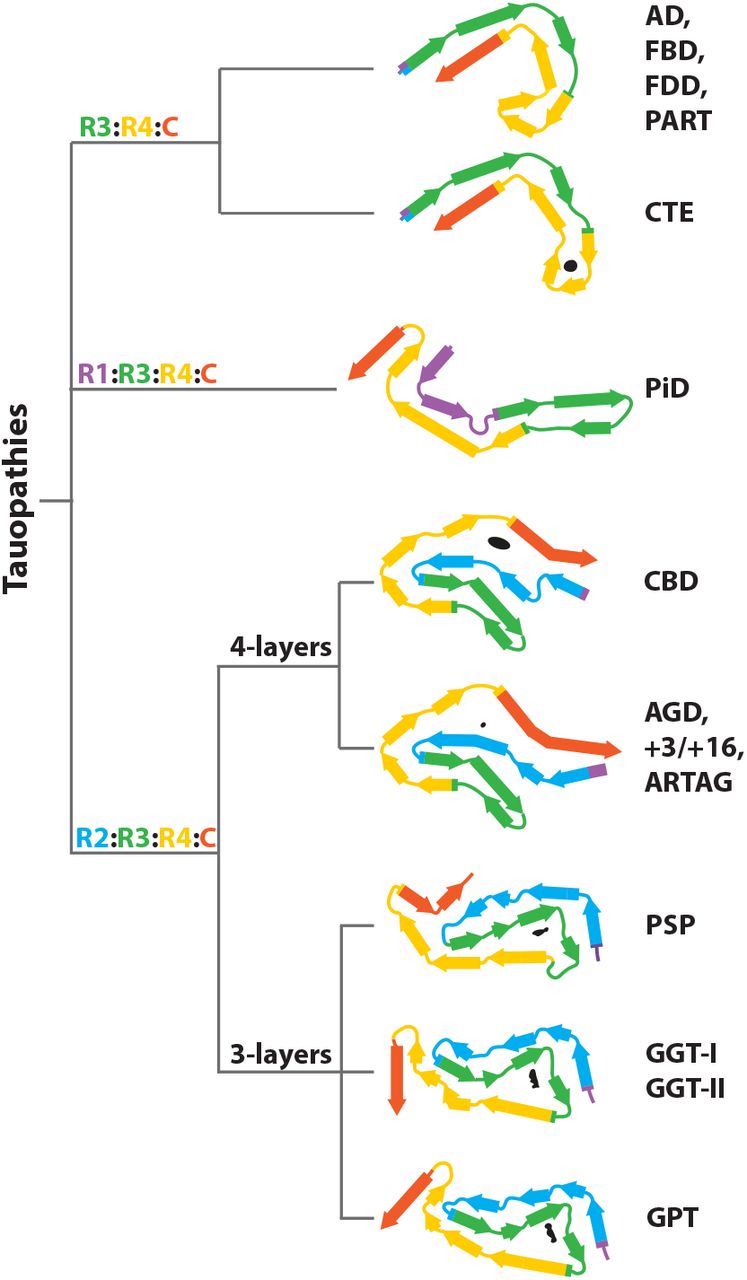
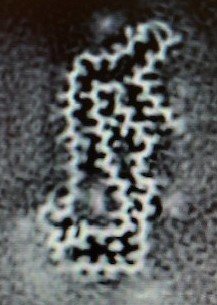
Misfolded tau from a patient with PSP (Shi Y., et al. Nature 2021)

They imaged tau from 11 diseases, a number large enough to justify a classification system using a few different features such as the number of layered folds and hairpin turns. They found that the folding patterns of the various PSP subtypes were identical except for one case of a rare type, PSP-F, a variant with disproproportionate frontal lobe behavior and cognitive problems. Under the new classification system based on tau folding, the tauopathy most similar to PSP was globular glial tauopathy, a rare cause of dementia diagnosable only at autopsy.


They found the folding pattern of Alzheimer’s tau to be identical to that of primary age-related tauopathy (PART), familial British dementia (FBD) and familial Danish dementia (FDD). The pattern in chronic traumatic encephalopathy (CTE) was similar but not identical to that. Corticobasal degeneration (CBD) was similar to argyrophilic grain disease (AGD) and aging-related tau astrogliopathy (ARTAG). Finally there was Pick’s disease, which was similar to none of the other ten.

SHI Y ET AL. NATURE 2021


Why is all this important? I’ll let the authors themselves explain:


“The presence of a specific tau fold in a given disease is consistent with its formation in a small number of brain cells, followed by the prion-like like spreading of tau inclusions. This may underlie the temporo-spatial staging of disease. Knowledge of the tau folds in the different diseases provides a framework for studying tauopathies that will lead to a better understanding of disease pathogenesis. At a diagnostic level, our findings will inform ongoing efforts to develop more specific and sensitive tau biomarkers.”

SHI Y ET AL. NATURE 2021


By “temporo-spatial spreading,” they mean where in the brain the damage spreads and how fast. So the next big step is to figure out just how the molecular structure presented on the surface of each kind of misfolded tau interacts with healthy brain structures. Once we do that, we can find a monkey wrench to throw into that process – one monkey wrench for PSP and globular glial tauopathy; another for AD and its pals PART, FBD and FDD and possibly CTE; one for Pick’s; and yet another for CBD, AGD and ARTAG.

I’ll try to keep you updated on this, and soon I’ll opine on the collateral question of whether this new work casts doubt on our long-held position that PSP, as a “pure tauopathy,” is a good test-bed for all of the tauopathies, including AD.

PSP grants awarded to a new generation

This week, CurePSP is announcing its semiannual crop of research grants. (Disclosure: I chair CurePSP’s Scientific Advisory Board, which reviews the grant applications and makes funding recommendations to the Board of Directors, of which I’m also a member.) Many granting agencies tend to favor senior researchers on the grounds that they’re known entities with a track record of success. CurePSP, however, has long tended to favor early-career applicants on grounds that they may bring new thinking and energy to the field and that our grant might make the difference in a young research’s choice of diseases to study for decades to come.

There were 22 applications in the current group. We chose to fund 3 early-career applicants – Drs. Bailey, Silva and Olah, all of whom happened to be women, and one world-class, senior guy, Dr. Geschwind. I’ll let the press release speak for itself.

CurePSP funds four new grants to study treatment of prime of life neurodegeneration

Studies at leading institutions may result in therapeutic approaches for PSP, CBD, FTD, and related diseases.

NEW YORK, NY (September 8, 2021) – CurePSP has awarded Venture Grants totaling $320,000 to scientists at Harvard Medical School, Columbia University, UT Southwestern Medical Center, and UCLA. The studies will investigate gene therapy, neuroprotective enzymes, activation of autophagy, and identification of microglia associated with toxic protein accumulation as possible therapeutic agents in the treatment of several neurodegenerative diseases.

Diseases like progressive supranuclear palsy (PSP), corticobasal degeneration (CBD), and frontotemporal dementia (FTD) are caused by the toxic accumulation of a naturally resident protein in the brain called tau that leads to destruction of neurons. Symptoms include loss of motor control, behavioral disinhibition, cognitive impairment, and difficulties in swallowing and speech. They are termed “prime of life” neurodegeneration because, unlike commonly occurring Alzheimer’s disease, they frequently strike in middle age. They are currently incurable and largely untreatable.

Dr. Rachel Bailey of the Center for Alzheimer’s and Neurodegenerative Diseases at UT Southwestern Medical Center in Dallas will study gene replacement therapy to combat toxic accumulation of the tau protein. Dr. Bailey will test a way to use a virus to deliver two types of RNA, one to prevent the manufacture of abnormal tau and the other to encode an aggregation-resistant form of tau.

Dr. Daniel H. Geschwind of UCLA’s Department of Neurology and his team will test four new, orally available drugs in mice genetically engineered to produce abnormal tau protein.  The drugs enhance the activity of an enzyme called puromycin-sensitive aminopeptidase, which both cuts up tau protein and enhances the brain cells’ “autophagy” system, which disposes of some types of abnormal proteins, including tau. 

Dr. Maria Catarina Lima da Silva of the Department of Neurology of Massachusetts General Hospital and Harvard Medical School in Boston will, like Dr. Geschwind, investigate small-molecule activators of autophagy to clear toxic protein accumulation in the brain. However, rather than using mice, Dr. Lima da Silva’s approach will utilize neurons grown from stem cells derived from skin biopsies of human patients.  She will study orally-available compounds that activate an enzyme called ULK1, an autophagy enhancer.

Dr. Marta Olah of Columbia University’s department of neurology in New York City will study microglia, the resident immune cells of the brain, which is recent years have been shown to be a major participant in the neurodegenerative process.  Dr. Olah will use a new method to sequence the RNA in individual microglial cells, creating a map of which cells are encoding which proteins in proximity to degenerating neurons.  This could generate new insights into the disease process and new targets for drugs.

CurePSP’s Venture Grants are awarded twice a year. Applications are reviewed and recommended to CurePSP’s board of directors by an independent scientific advisory board. The next application deadline is December 17, 2021.

A how-to guide for doctors

Educating health care providers about PSP and CBD has long been a goal of mine and of CurePSP.  Most of my patients relate unfortunate stories of bothersome or even disabling symptoms for years before any physician suspected the correct diagnosis.  During those years, they may have endured futile, expensive, and potentially harmful diagnostic tests and treatments.  Even after PSP or CBD is correctly diagnosed, attempts to manage the symptoms are often unsupported by evidence, prescribed at an inappropriate dosage, or continued after any benefit has disappeared — while their side effects continue.

All too often, the neurologist tersely informs the patient that no treatment is available for PSP or CBD and that they should just go home, do the best they can and maybe get some physical therapy.  While it’s true that there’s no “specific” treatment or way to slow the underlying disease process, there are treatments that ease most of the symptoms as symptoms.  This is called “palliative” or “symptomatic” management and it’s up to the neurologist and other clinicians to understand and offer it.

These management measures are not unique to PSP or CBD – they are standard drugs and therapies used for symptoms regardless of their underlying cause.  Having said that, it’s also true that patients with PSP may differ from others in their reactions to common medications. 

You may recall that in 2018 a brief single-author book appeared that described management of PSP for clinicians.  For better or worse, the author (that would be me) relied heavily on his own experience, his own reading of the literature and his own philosophical point of view to recommend diagnostic and therapeutic approaches.  That was great as far as it went, but it didn’t reach much of an audience.  The book’s cover price — $75 for the paperback or digital editions – deterred many, and the publisher didn’t advertise it at all.

But now we have a new resource – the CurePSP Centers of Care.  In 2017, when CurePSP organized this network of highly-qualified academic centers in the US and Canada, the mission was to have a list of geographically well-distributed centers providing first-rate care for PSP and CBD.  The network has now grown to 30 sites with plans for 10 more in the next few years.  But besides providing care, the CoC’s are also uniquely positioned to work collaboratively to improve care.  

So in 2019, I and the other three members of the CoC Steering Committee (Drs. Irene Litvan, Brent Bluett and Alexander Pantelyat) organized the other 21 (at the time) CoC site directors to write a “best practices” document on the symptomatic management of PSP and CBD.  We divided the topic into 12 section and for each, created a writing committee from the list of site directors and any institutional colleagues whom they chose to recruit as collaborators.  Each committee submitted a 2- or 3-page draft that the Steering Committee edited and stitched together into a coherent article.  We returned that to the whole group so that every co-author could have some input into the whole document and then submitted the result for publication.

We chose Frontiers in Neurology, an “open-access,” on-line journal, meaning that viewing and downloading articles does not require a subscription or a per-article fee.  Such journals cover their expenses by having advertising and by charging a fee to the authors; in our case CurePSP paid the $2,950 bill.

Here’s the link to the article and here’s the URL: https://www.frontiersin.org/articles/10.3389/fneur.2021.694872/full

Please consider sending the link (or a hard copy) to any clinician you know who takes care of people with PSP or CBD.  That’s not only neurologists, but also primary care physicians and nurse practitioners, ophthalmologists, optometrists, rehabilitation medicine specialists, neuropsychologists, physical therapists, speech/swallowing therapists, and occupational therapists.  Maybe keep a copy in your “go-bag” to provide to your doctors and nurses in a hospital or emergency room.  CurePSP will soon start a North America-wide campaign to distribute the link along with a series of videos of experts discussing and enlarging on points raised in the publication.

I think the authors of the paper did a great job, if I do say so myself.  But now begins the real work of broadcasting our advice so that clinicians can be competent and comfortable taking care of people with PSP and CBD.

Repurposeful

Now that CurePSP’s December 1 deadline for its next semi-annual crop of grant applications has passed, I’ll try to finish reporting on the crop of funded projects from July’s deadline. 

This one’s pretty cool.  It tests an FDA-approved drug for AIDS called efavirenz (brand name, Sustiva) for  its ability to prevent tau from aggregating and causing brain cell loss in a mouse model.  The principal investigator is Rik Van der Kant, PhD of the Vrije University in Amsterdam.  Like most of CurePSP’s grant recipients, he’s relatively junior, having completed his PhD in 2013 and his postdoctoral training only in 2019.

Dr. Van der Kant and his colleagues have shown that efavirenz improves degradation of tau in brain cells that were created from human stem cells.  In fact, the drug is already in a very small, early-phase clinical trial for Alzheimer’s disease at Case Western and at Mass General. That trial was expected to finish in December 2020 (this month), but I assume that the Covid lockdown has delayed that.

The new project will give efavirenz to P301S mice.  Those critters carry not only their own normal mouse tau gene, but also a human gene for tau with a mutation that causes a PSP-like illness in people.  (It’s actually a familial form of frontotemporal dementia that closely resembles PSP.)  Tau P301S mice are probably the best PSP model we have at present, all things considered, though stem-cell-based models are gaining fast.

The tauopathy-prone mice will receive either efavirenz or a control solution in their drinking water from age 3 months to 6 months.  After another 3 months, they will be tested for their motor and cognitive abilities and their brain tissue will then be analyzed for tau, phosphorylated tau, number of neurons and synapses, and for the efficiency of one of their brain cells’ garbage disposal mechanisms, the proteasomal system.  Dr. Van der Kant’s hypothesis is that efavirenz revs up the proteasomal system by reducing cholesteryl esters.  Evidence from his stem cell work supports that idea, but he would now like to investigate this in a whole animal.

The next step, not covered by the current grant, would be a trial in people with PSP.  Efavirenz reached the US market in 1998 and has been available as a generic since 2016.  It crosses the blood-brain barrier and is acceptably safe and well-tolerated in patients with AIDS.  There’s no reason to suspect that those with PSP wouldn’t tolerate it as well, but we can’t just assume that.  Of course, as a generic, it may be difficult for efavirenz to find funding for clinical trials for a new indication.  CurePSP might be willing to chip in what it can, but their maximum grant is $100,000, while the median phase II trial costs $8.6 million and the figure for phase III trials is $21.4 million.  Sometimes this problem is solved when a deep-pocketed drug company invents a new version of the drug that works the same but is chemically different enough to win a new patent. 

But first let’s all hope the drug works in the P301L mice.  Pessimism alert: Maybe in a future post, I’ll opine on why davunetide, tideglusib and two monoclonal antibodies worked in similar mice but not in human PSP.  That’s one of the biggest questions in PSP research right now.

Drilling into a gene

So here’s the second of five installments in this fall’s series on CurePSP’s newly funded grants. 

Do you recall that the 2011 publication by CurePSP’s Genetics Corsortium discovered four new places in the genome where a slight variant is associated with slightly greater chance of developing PSP?  The genes containing those variants are cryptically called MAPT, STX6, EIF2AK3 and MOBP.  The first one stands for “microtubule-associated protein tau” and the protein it codes for is, of course, our old frenemy, the tau protein.  Well, when you break the effect down statistically, it turns out that in the MAPT gene, two different variants are each independently associated with increasing PSP risk.  One has been known since 1998 and remained the only known PSP genetic risk factor until 2011.  Its name is the “H1 haplotype.”  (Click on the link for explanatory details. )  The other one, previously unknown, is called only “rs232557.” That variation specifically is the substitution of one “letter” in the genetic code for another, called a single-nucleotide polymorphism, or SNP, pronounced “snip.”  The substitution is probably not itself be the cause of the PSP risk; it’s only a “marker,” a variation that was already present in the MAPT gene in the individual in which the PSP-causing mutation originally occurred. That person then passed both the innocuous old marker variant and the new disease-causing variant together to subsequent generations.  The two stayed together on the chromosome (in this case, chromosome 17) through all those generations because their very close physical proximity means that a break between them during the reproductive process (where sperm cells or ova are made, called “meiosis”) is statistically unlikely. 

Still with me here?  Back to the new grant, where Rueben G. Das, PhD of the University of Pennsylvania proposes to figure out just how the variant revealed by the rs242557 marker increases PSP risk.  We already know that rs242557 is located in an intron of the MAPT (tau) gene.  Introns are long stretches of DNA between the shorter stretches, the exons, which actually encode the structure of proteins.  Introns can do a variety of things, though many of them seem to be just “junk DNA” deactivated by the evolutionary process somewhere between single-celled creatures and ourselves.  But some introns regulate the “expression” of the exons, i.e., the number of RNA molecules the exons produce, which in turn determines the number of molecules of the corresponding protein that the cell makes. 

Introns may also regulate which specific exons in the gene actually get encoded into RNA and which don’t.  That’s relevant for PSP, where nearly all the tau molecules in the neurofibrillary tangles include the product of MAPT’s exon 10, producing “4-repeat” tau.  This contrasts with normal tau in adult human brain, which includes exon 10’s stretch of amino acids on only half of the copies.  The other half are called “3-repeat” tau.

One of Dr. Das’ experiments will simply excise (“knock out”) the variable nucleotide at the rs242557 site.  Others will knock out or change one of the nucleotides nearby.  These experiments will be tried in both mouse and human brain cells.  One of the outcomes the researchers will look for will be the ratio of messenger RNA for the two forms of tau, 3-repeat tau and 4-repear.  A ratio favoring 4-repeat tau would suggest a PSP-causing effect.  Of course, they will also look at the finished tau proteins corresponding to these MAPT gene variants.

Additional readouts will be the messenger RNAs for other genes located in the same general area of chromosome 17 (and their associated proteins) that have bene associated with PSP or Alzheimer’s disease.  Those genes are called NSF, KANSL1, LRR37A and CRHR1.

Dr. Das completed a postdoctoral fellowship (the final stage of training for a lab scientist) at Penn in 2017 under the mentorship of Gerard Schellenberg, PhD, a world authority in the genetics of neurodegenerative disorders.  They continue to work together now that Dr. Das has graduated to Senior Research Investigator at Penn.  Jerry serves on CurePSP Scientific Advisory Board and of course recused himself from the evaluation of this grant application.

Back to science: To create these tiny, targeted changes in the DNA at the rs242557 site, Dr. Das and colleagues will use the new gene-editing technique called CRISPR-Cas9.  Just a month ago, the two scientists most prominent in the development of that technique, Jennifer Doudna and Emmanuelle Charpentier, received the Nobel Prize for that work, which appeared in 2012 and has been called one of the most important advances in biological science in history.   Like many useful techniques in biology and medicine, this one harnesses something from nature, in this case an anti-viral defensive mechanism present in about half of all species of bacteria, an enzyme called CRISPR (clustered regularly-interspaced short palindromic repeats).  The CRISPR protein is coupled with another bacterial protein, Cas9, which can cut DNA.  (“Cas” means CRISPR-associated, and yes, there are at least eight other Cas enzymes.)  The researcher then adds to the complex of CRISPR and Cas9 a stretch of synthetic RNA custom-designed to complement the stretch of DNA targeted for alteration.  That “guide RNA” allows the complex to recognize the DNA site of interest, where the Cas9 proceeds to make a cut. 

If this project is successful and reveals which nearby genes are up- or down-regulated by variants in rs242557, the next steps would be to try to normalize the function of the resulting protein by other means such as conventional drugs. Another approach might reduce the expression of the offending DNA variant by giving an anti-sense oligonucleotide.

This grant is only a one-year project and I’ll report its results once published or otherwise publicly presented.  Stay tuned now for posts on the other new CurePSP grants.

Knowing one’s limitations

As promised, here’s the next installment in my series on impactful posters on PSP from the annual conference of the International Parkinson’s and Movement Disorders Society that is winding up today on line.  This poster, like the one in my last post, is from Japan.

Most of you know that corticobasal degeneration (CBD) is very similar to PSP in many ways, though only about a tenth as common.  The most common typical clinical syndrome of PSP, called PSP-Richardson syndrome, correlates extremely closely with the typical pathological autopsy appearance that we call PSP.  But for CBD, the most common clinical syndrome, called corticobasal syndrome (CBS) has a much looser correspondence with the typical autopsy picture called CBD.  Only about half of all people with CBS have CBD at autopsy.  Of the rest, the most common autopsy picture is PSP, then Alzheimer’s disease, with a half-dozen or so others comprising the rest.  Unfortunately none are more treatable at present than CBD.  Here’s an up-to-date, authoritative, technical description of that for you to chew on if you want the details.

Here’s some more background:  One of the ways that PSP can present itself clinically is with the corticobasal syndrome.  In other words, about 3 percent of people with PSP in the brain look outwardly like they have the typical appearance of CBD.  How to tell if those folks have PSP-CBS or CBD-CBS itself?

The leading clinical PSP expert in Japan, in my biased opinion, is my friend Ikuko Aiba, MD.  She and her colleagues in Nagoya compared the medical records of 12 autopsy-proven patients with CBD with those from eight with autopsy-proven PSP-CBS.  The only clinical feature that was more common in the CBD-CBS patients was urinary incontinence and the only one more common in PSP-CBS was limitation of vertical gaze and slowed eye movements (“saccades”) in general.  The CBD-CBS patients tended to progress a little more quickly with regard to overall loss of mobility.

The take-home is that in the absence of specific treatment for either condition (i.e., treatment directed at the cause rather than the symptoms) this information could be useful in refining recruitment in clinical trials, in prevalence studies and diagnostic biomarker development, each of which would like to be able to create a patient series consisting purely of the disease under study.

The other take-home is that it’s actually next to impossible to distinguish PSP-CBS from CBD-CBS in the living patient.  Neurologists who claim to be able to do so, even with this bit of new information, are just kidding themselves — and their patients.  They should just diagnose “corticobasal syndrome” and leave it at that. Thanks to Ikuko Aiba and colleagues for pointing that out.

A clue from proteomics

The annual conference of the International Parkinson and Movement Disorders Society (“MDS”) is in progress this week on line.  The location of this meeting normally migrates from city to city world-wide and this year was supposed to be Philadelphia.  Nice city to visit – great history, great art, great restaurants (both fancy and ethnic).  Oh, well.  One of our many sacrifices to the pandemic and all things considered, not a serious one.

Of the 1,000 posters reporting new research, 17 were on PSP.  One that sounds very interesting is from Hiroshi Takigawa and colleagues at Tottori University in Yonago, Japan.  They did a proteomic survey of cerebrospinal fluid (CSF) from people with PSP, Parkinson’s, corticobasal syndrome and some healthy, age-matched volunteers.  Proteomics is a generic term for big-data studies of all the proteins in a biological samples, just as genomics is the study of all the genes.  In this case, they compared the collection of thousands of CSF proteins among the four groups listed and found that the only one that’s higher, on average, in PSP relative to the other three to a statistically significant degree is something called chromogranin B.  They also found that a small fragment of the 657-amino acid chromogranin B protein was the only protein (or fragment thereof) that was less abundant in CSF in PSP, on average, than in the other conditions. The fragment, which is only 31 amino acids long, is called bCHGB-6255.

For neither of these findings was the magnitude or consistency of the difference enough for use as a diagnostic test at the individual level.  (Statistical digression: For the biostatisticians among you, the area under the ROC for bCHGB-6255 was only 0.67.  For the rest of you, the receiver operating characteristic is a graph comparing the likelihood of true positives with that of false positives for the full range of possible definitions of an abnormal level.  The area under the ROC, if the each axis of the graph goes up to 1.00, has a theoretical maximum of 1.00, in which case there’s no risk of false positives in exchange for full identification of the true positives.  A result of 0.80 is barely acceptable for a test to be useful at the individual level and 0.90 is preferred.)

The value of the finding is the demonstration that chromogranin B might have something to do with the degenerative process underlying PSP but none of the related diseases.  Furthermore, the inverse relationship of the full chromogranin B molecule and its bCHGB-6255 fragment suggests that there’s something about the fragmentation process that may be uniquely important to PSP.  Maybe an enzyme that cleaves chromogranin B is deficient, damaged or suppressed in PSP.  Only further research will work that out.

What does chromogranin B normally do?  We don’t know.  It’s present in a wide variety of brain cells that use norepinephrine as their neurotransmitter and also in many cells in other organs.  It’s somehow associated with the secretion of norepinephrine and its blood levels are known to be elevated by certain tumors.  Tests for it are available from commercial medical labs.  But as I emphasized above, the test would be diagnostically useless at the individual level.

Most of the presentations at important meetings like the MDS are research that has not yet passed peer review, or at least not yet published.  So you have to take it with a grain of salt.  Of course, the same thing can be said for any research that has not been confirmed by other labs using other methods.  And even then . . . I’ll tell you about other interesting MDS posters in the next few days.

A family matter

Want to know what’s hot in lab research on PSP?  Or, more accurately, want to know what will be hot in a year or two?  This week, CurePSP will announce its four newest research grant awardees.  Most of the 20 competing applications, a very large crop for CurePSP, were of excellent quality and in a less competitive cycle many of them would have been funded.   A fifth and possibly a sixth application may be funded next month after CurePSP’s leaders have had a chance to discuss the use of a new, unexpected, seven-figure donation.

Since I’m driving this bus, I’ll start with the funded grant I consider the most intriguing, though it’s the smallest of the four.  For two decades, researchers at the University of Southern California have been following a Mexican-American family with PSP in 14 members over three generations.  Two of the 14 have had autopsies confirming the diagnosis.  The inheritance pattern is most likely autosomal dominance (look it up).  There are six living, affected members and another 19 who are at 50% risk because they have an affected parent or sibling.  One of the affected members has had sequencing of the gene that encodes tau (called the MAPT gene).  That revealed no mutations.  Now, John M. Ringman, PhD and his USC colleagues plan to sequence the entire genome of four affected and one unaffected family members.

It’s entirely possible that the result will be a mutation in one of the half dozen or so genes besides MAPT that have already been identified by other methods as conferring a slight risk of developing PSP.  That wouldn’t be so exciting, though it would show that one mutation in that gene suffices to cause the disease while other mutation(s) in the same gene only raise PSP risk slightly.  That would shed light on just how that gene works with respect to PSP.

A more exciting result would be if the culprit gene in this family turns out to be one that has not been previously associated with PSP.  Even though this particular mutation would clearly not be the cause of “regular” PSP, perhaps the protein that this gene encodes will prove to be part of a molecular pathway critical to the pathogenesis of PSP but not yet investigated carefully.  That could point to scads of new treatment targets for drug developers and maybe even a diagnostic test.  Very cool.

I led a project like this on Parkinson’s disease back in the 1980s and 1990s, though we didn’t have whole-genome sequencing then.  I won’t get into the details, but you can read about the big family I found and worked with here, my subsequent clinical analysis of the family here, the report of the culprit gene here, the discovery of its significance to PD in general here, the development of a diagnostic test based on the gene’s product here, the efforts to prevent PD in lab models by reducing the gene’s product here and an initial safety report on a Phase 1 human trial here.  Maybe that’s why I find Dr. Ringman’s little project so intriguing.

More on the other new grantees in the next post.